We argue about the price of milk. We argue about the fat percentage, the brand, the blue packet versus the green packet. In millions of Indian kitchens, milk is the first thing bought in the morning and the last thing thought about. And yet there is one question we almost never ask out loud: do we actually know what is in it?
I am Aryan Sharma, and I started PYAAS because that question kept me up at night. Not because of some dramatic headline, but because of how ordinary the problem is. The milk quality problem in India is not usually a scandal. It is a silence.
The crisis is quiet, and that is exactly why it persists
When people hear "milk quality crisis" they picture something cinematic: adulteration raids, foaming chemicals, a news anchor holding up a test tube. Those stories are real, but they are the loud, rare edge of the problem. The version that touches almost everyone is far quieter.
It is the milk that is technically fine but completely anonymous. It has passed through a collection point, a chilling centre, a tanker, a processing unit and a distributor before it reaches your doorstep. By the time you pour it into a glass, there is no honest way to answer a simple question: which farm did this come from, and how was that cow kept last week? Nobody is hiding the answer. The answer simply does not exist anywhere.
Milk quality is really a trust problem
Here is the shift in thinking that shaped PYAAS. I stopped seeing quality as only a lab number and started seeing it as a chain of trust. A litre of milk can hit every printed specification and still fail you, because the specification cannot tell you the things that actually decide quality:
- Which farm and which farmer produced it, and whether their name is attached to it
- How the animals were fed, housed and cared for in the days before milking
- How quickly the milk was cooled and how carefully it was handled on the way to you
- Whether anyone in the chain would stand behind that specific batch by name
When none of that is visible, "quality" becomes a leap of faith. You are not buying milk you can verify. You are buying a promise from a stranger. For something your children drink every single day, that is a strange amount of blind trust to be asked for, and most of us have simply gotten used to it.
What actually goes wrong between the cow and your kitchen
Most quality is not lost in one big failure. It leaks out in small ones. Milk from many farms gets pooled together, so one careless supplier's output disappears into everyone else's. Cold chains break for an hour here, a delay there. Records, where they exist at all, describe averages and totals, not your pack. Every hand-off is a place where information falls away, and information is the thing you needed most.
The result is a market where the honest farmer and the careless one are paid roughly the same, because the buyer has no way to tell them apart. That is the part that genuinely upsets me. When quality is invisible, there is no reward for doing it right, and no cost for doing it wrong. Fix the visibility, and you start to fix the incentives underneath it.
How we are trying to close the gap at PYAAS
PYAAS is built on one stubborn idea: you should be able to know your milk. Not trust a slogan, know it. Our A2 Bilona cow ghee is live and shipping across India today, and every pack is traceable by QR to the farm, the farmer and that batch's quality record. Fresh A2 cow milk is next, launching in Lucknow from August 2026 and expanding across Uttar Pradesh, built on the same promise from day one.
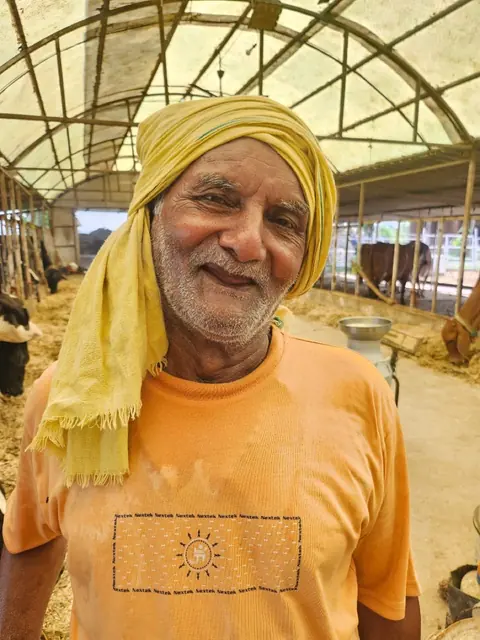
Behind that promise are real, named partner farms in Gonda, Uttar Pradesh, like Sri Radha Mohan Dairy Farm, where farmer Ram looks after a herd of 76 cows, alongside Gonard Dairy and Ranjeet Singh Dairy Farm. The A2 milk comes from the A2 cows in those herds, and the farmer's name travels with it. When you can see the farm and the person behind your pack, quality stops being an abstract claim and becomes something you can check for yourself. You can meet our partner farms here.
The standard I want for everyday milk
I do not think transparency should be a luxury feature reserved for premium products. I think it should be the baseline for something as everyday as milk. My hope is that a few years from now, being asked to trust anonymous milk will feel as odd as being asked to eat at a restaurant with no idea who cooked the food.
We are building PYAAS toward becoming a ₹100 crore dairy brand, but honestly, the number matters less to me than the habit I want to change: the habit of not asking. If more Indians start asking where their milk comes from, and more brands are forced to answer honestly, then the quiet crisis finally gets loud enough to fix. That is the future I am working toward, one traceable pack at a time. Know your milk.
Health articles are general information, not medical advice. Talk to your doctor about your own diet.
Common questions
What is the real milk quality problem in India?
The biggest issue is not a single dramatic scandal but a lack of everyday transparency. Most milk changes many hands between the cow and your kitchen, and by the time it reaches you it is almost impossible to know which farm it came from, how the animals were kept, or what happened to it along the way. That missing information is the real quality gap.
How can I check the quality of the milk I buy?
Look for a brand that can tell you where the milk came from, not just what is printed on the pack. Ask whether you can trace it back to a specific farm and batch. At PYAAS, every pack is traceable by QR to the farm, the farmer and that batch's quality record, so the information travels with the milk instead of getting lost.
Is A2 milk better quality than regular milk?
A2 refers to the type of beta-casein protein in the milk, and some people find it easier to digest, but A2 on its own is not a guarantee of quality. What matters just as much is how the animals are cared for, how the milk is handled and cold-chained, and whether you can actually verify any of it. Good genetics and honest handling have to go together.
One guide a week, on WhatsApp
Short, plain, no spam. Stop any time by replying STOP.