
Loose Milk vs Packaged Milk: Safety and Truth
For generations, the doodhwala at the gate was how India got its milk, ladled fresh into your own vessel. Then came the sealed packet and the tetra pack, promising safety and standard measures. Today most families use one or the other out of habit, rarely asking the real question: which one can I actually trust? The loose milk vs packaged milk debate is not about nostalgia versus modernity. It is about safety, adulteration and, above all, how much you can verify.
The case for loose milk
Loose milk has genuine appeal. It often comes from a local source, feels fresh, and you can sometimes watch it being measured. There is a human connection to the person selling it, and in many households the milkman has been trusted for years. When that trust is well placed and the milk is clean, loose milk can be lovely and truly fresh.
But that trust rests entirely on the seller's integrity, because there is usually nothing to verify it. Loose milk is typically not pasteurised, not sealed, and not lab-checked. You are taking the seller's word, and only their word.
The adulteration problem
This is where honesty matters. Unsealed, untraceable milk is easier to tamper with, and adulteration is a real and documented problem in India. The common issues include:
- Water added to increase volume, thinning the milk and its nutrition.
- Cheap solids or powder mixed in to disguise that dilution.
- In the worst cases, substances that have no business in milk at all, added to fake richness or extend shelf life.
The trouble is that most of this is invisible to the eye. Milk that has been watered and then bulked up can look perfectly normal in the vessel. This is not a claim that every milkman cheats; many are honest. It is a plain fact that loose milk offers you no way to check. If you buy it, learn to test it. Our guide on how to check milk purity at home gives you seven simple checks any family can run.
The case for packaged milk
Packaged milk answers some of these worries. It is usually pasteurised, which makes it microbiologically safer, and it is sealed, so it cannot easily be tampered with after packing. Standard brands run quality checks and print dates. For many urban families, this is a real step up in safety and consistency.
But a sealed pack is not a magic guarantee. The seal protects the milk after packing; it does not, by itself, tell you where the milk came from, which animals produced it, or how it was handled before it reached the plant. A packet can be safe and standard and still be anonymous. Safety and truth are related, but they are not the same thing.
The real answer: traceability
The honest resolution to loose milk vs packaged milk is not simply picking the packet. It is insisting on milk you can actually trace. The strongest position is milk that is both safely handled and transparent about its origin, so you are not trusting a face at the gate or a faceless brand, but a verifiable record.
That means being able to answer:
- Which farm did this milk come from?
- Who is the farmer behind it?
- Was this specific batch quality-checked, and can I see that?
When a pack can answer those questions, safety and truth finally sit together. This is exactly why we argue that India needs milk traceability, and why a known single source beats an anonymous blend, as we explain in single-origin milk: why one farm beats a thousand.
How PYAAS closes the gap
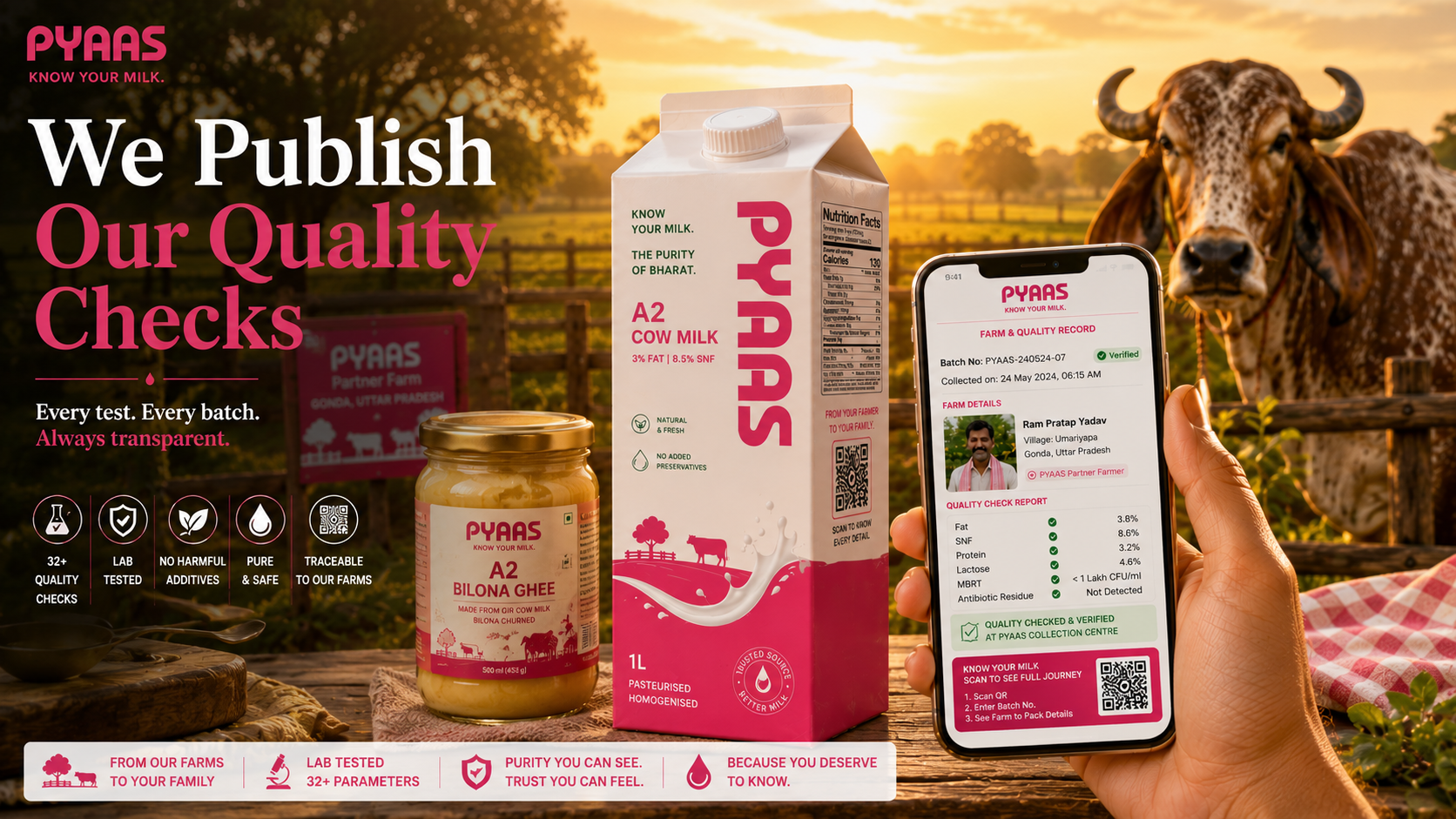
PYAAS was built to give you the freshness people love about loose milk with the safety and, crucially, the verifiability that most milk lacks. Our fresh A2 cow milk launches in Lucknow from August 2026 and will expand across Uttar Pradesh, drawn from named partner farms in Gonda: Sri Radha Mohan Dairy Farm, Gonard Dairy and Ranjeet Singh Dairy Farm. Every pack will carry a QR code you scan to see the exact farm, the farmer, and that batch's quality-checked record, our Know Your Milk promise. A2 milk comes only from the A2 cows within a herd, identified cow by cow, never a whole tank labelled A2.
Until the fresh milk reaches your city, our A2 Bilona cow ghee already ships across India today in small batches, carrying that same traceable record. The point is simple: you should never have to choose between a trust that cannot be checked and a safety that cannot be traced.
The honest bottom line
In the loose milk vs packaged milk choice, neither format is automatically pure or automatically dangerous. Loose milk is fresh but usually unverifiable and easier to adulterate. Packaged milk is safer but can still be anonymous. The real winner is milk you can trace to a real farm, a real farmer and a real quality record. Do not settle for taking anyone's word for it, whether that word comes from a gate or a glossy pack. Ask to see the source, and know your milk.
Written by
Aryan Sharma
PYAAS is an honest, traceable Indian dairy brand from Gonda, Uttar Pradesh.
More from Aryan SharmaCommon questions.
Is loose milk less safe than packaged milk?
Loose milk is not automatically unsafe, but it usually is not pasteurised, sealed or lab-checked, so the risk of contamination and adulteration is higher and harder to verify. Packaged milk is typically pasteurised and sealed. In the loose milk vs packaged milk question, the real issue is not the format but how much you can verify.
How is loose milk commonly adulterated?
Loose milk is sometimes diluted with water or bulked up with cheap solids, and in worse cases mixed with substances that should never be in milk. Because it is unsealed and untraceable, these additions are hard to detect by eye. Simple home tests and, better still, a traceable source help you know what you are getting.
Does packaged milk mean it is automatically pure?
Not automatically. A sealed pack lowers tampering risk after packing and usually means the milk was pasteurised, but the seal alone does not prove the milk's origin or quality. The strongest assurance comes when a pack lets you trace the exact farm and batch, which is what makes packaged milk genuinely trustworthy.
Get the next one in your inbox.
The occasional note on milk, ghee, and how we work. Plain words, no hype, and you can leave any time.
Keep reading.
How to Tell If Ghee Is Pure: Simple Home Tests
29 August 2026
The Milk Quality Crisis No One Talks About
12 August 2026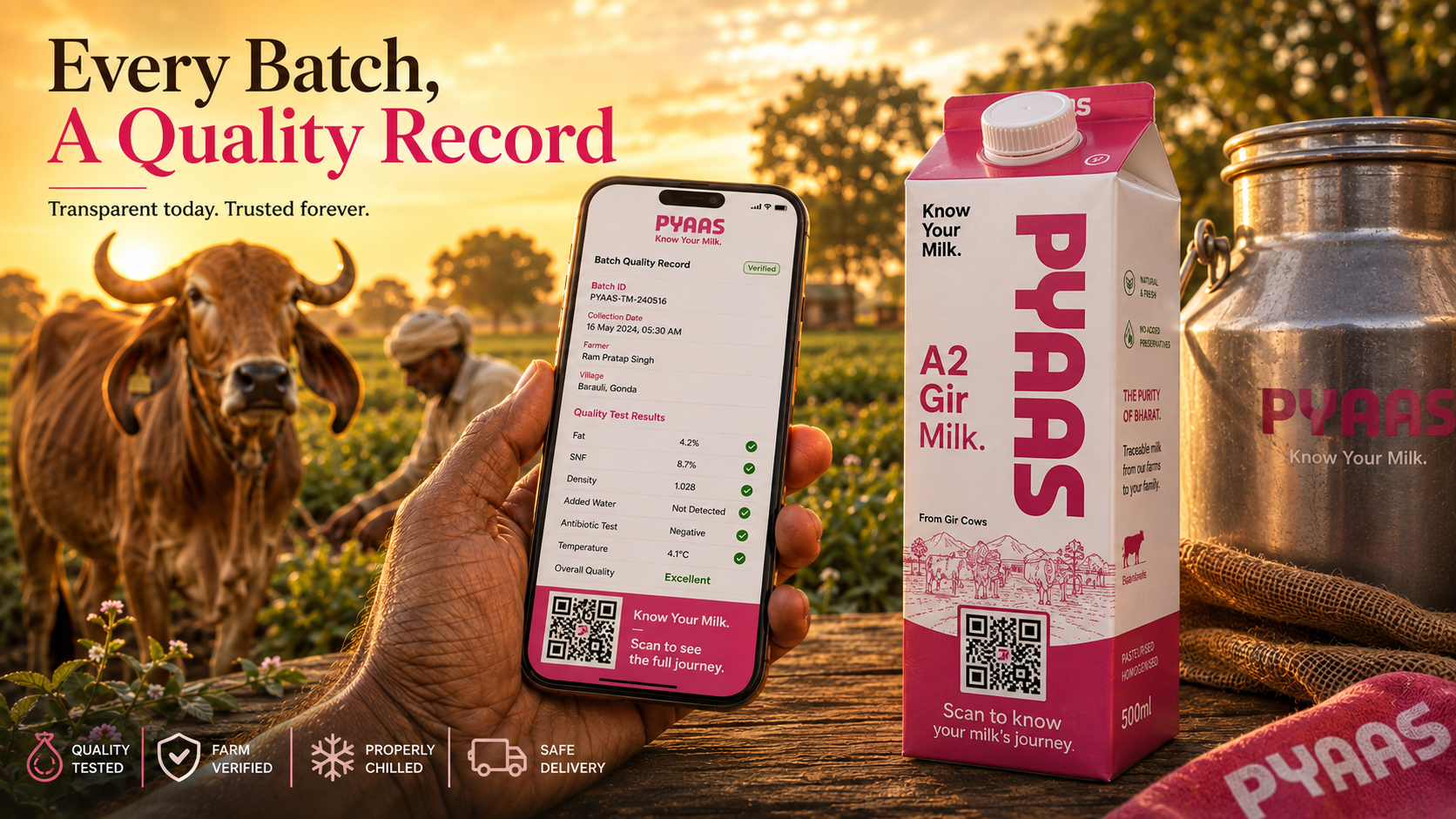
Turning Every Milk Batch Into a Quality Record
2 August 2026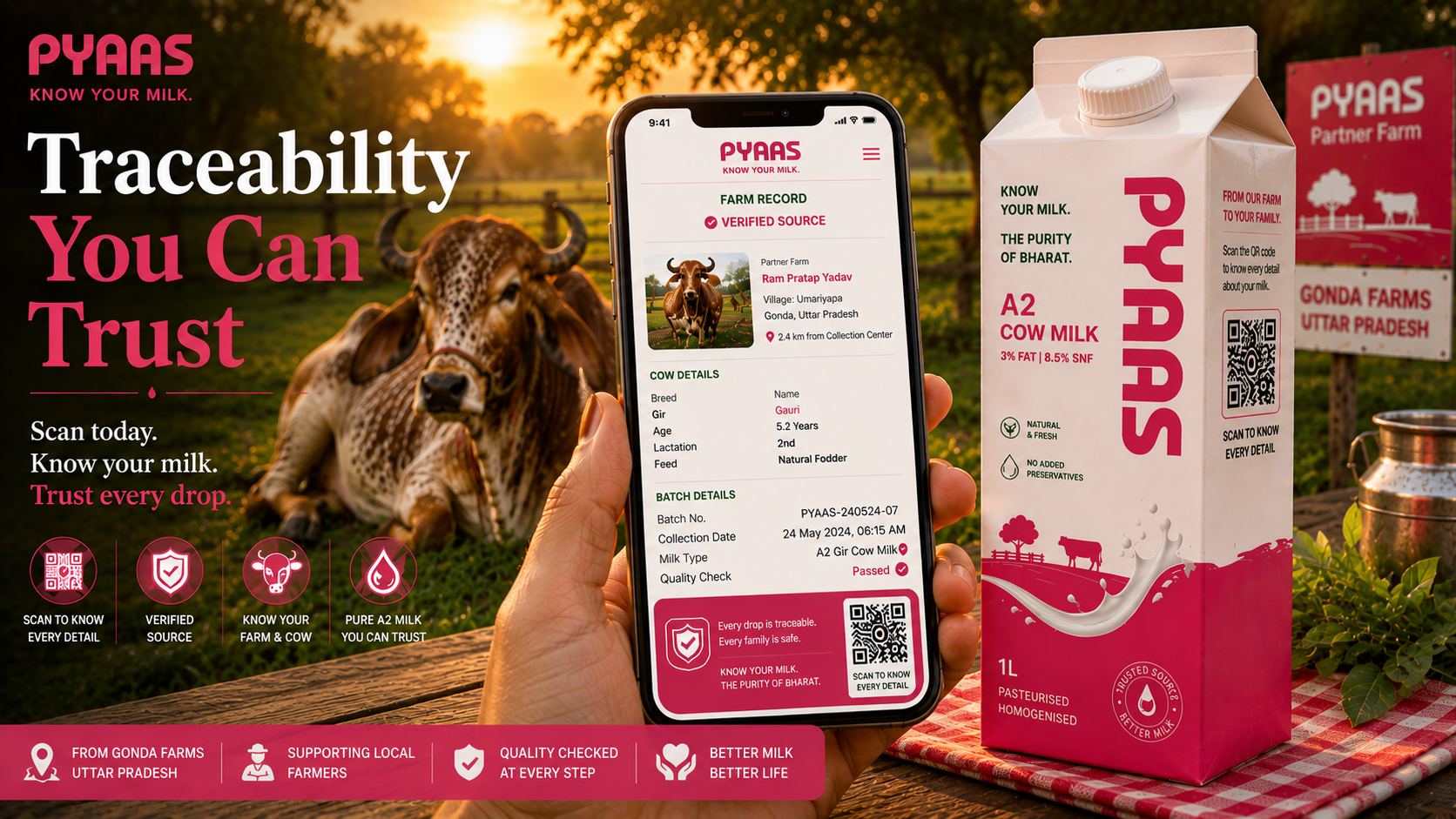
The Data Behind a Safe Glass of Milk
29 July 2026