Turning Every Milk Batch Into a Quality Record
Milk has a very short window of honesty. From the moment it leaves the farm, the clock starts, and the only way to prove what it was at that moment is to write it down before the moment passes. At PYAAS, that written-down moment is what we call a batch quality record.
I am Kushagra Shekhar Kaushik, Founder and CTO of PYAAS, and the batch quality record is the part of the company I spend most of my time building. This is a plain, honest look at how it works: how we turn a batch of dairy into a record you can actually read.
Why a batch has to mean something
In most of the dairy industry, milk is pooled. Thousands of farms empty into one tanker, and by the time it reaches you a batch is just a production date, an abstraction with no farm and no face behind it. If something goes wrong, there is nothing specific to point to. That is the model we deliberately walked away from.
We keep our milk single-origin, from named farms in Gonda, Uttar Pradesh, so that a batch stays a real, traceable thing. When milk comes from Sri Radha Mohan Dairy Farm, the 76-cow herd tended by farmer Ram, or from Gonard Dairy or Ranjeet Singh Dairy Farm, we can tie every batch back to one farm, one herd and one collection. A batch quality record only means something if the batch itself does.
What we capture for every batch
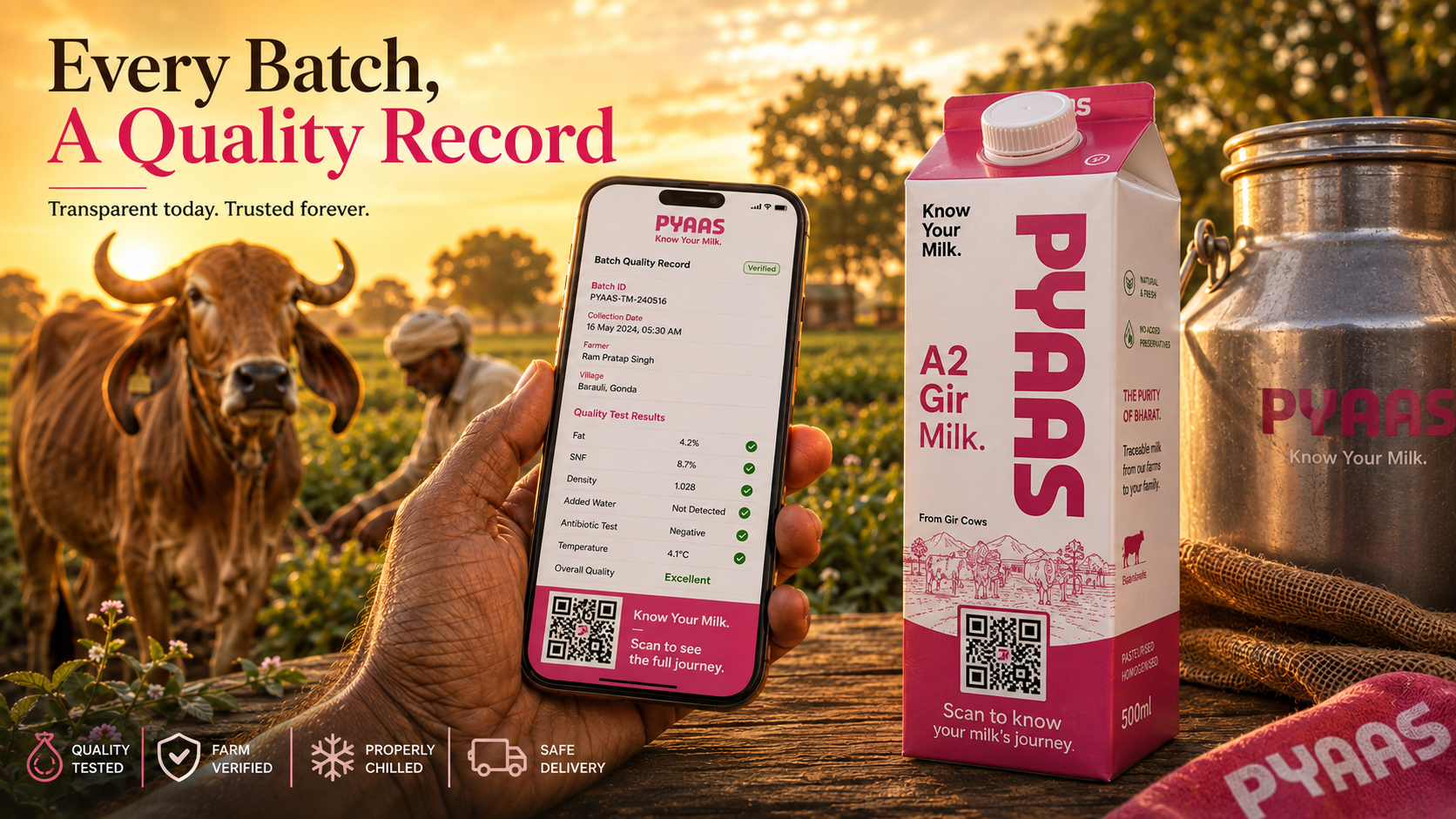
A batch quality record is not a marketing badge. It is a small, specific set of facts written down at the point of collection. For every batch we record:
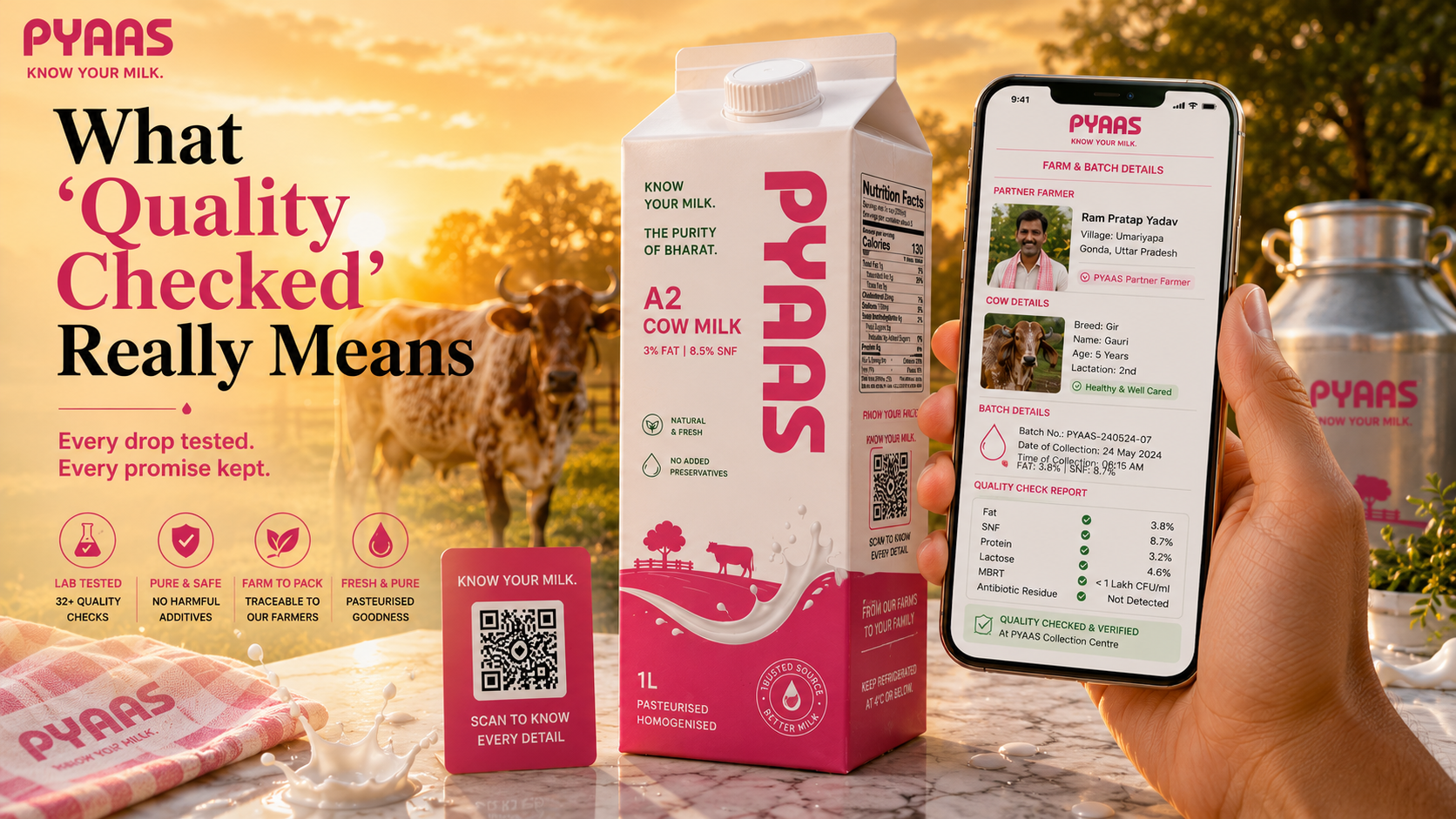
- The farm and the farmer — which of our named Gonda farms it came from, and who tended the herd.
- When it was collected — the date and time the milk left the farm, so freshness is a fact and not a feeling.
- Composition — the FAT and SNF for that batch, the two numbers that describe what is actually in the milk.
- The quality checks — the routine intake checks we run on freshness and composition, recorded against that specific batch rather than left as a vague promise.
- A batch ID — a single identifier that ties all of the above together and, later, to the QR code on the pack.
From farm to record: how the capture works
The flow is deliberately boring, because boring is what survives contact with a real supply chain. Milk is collected at the farm and its details are logged against a fresh batch ID. At intake it is quality checked, and those readings are written to the same record. Nothing about a batch is reconstructed from memory later; the record is created while the milk is in front of us, not after it has shipped.
My job as CTO is to make sure that record cannot quietly drift from reality. Each batch record is captured once, linked to its farm and collection, and carried forward unchanged to the pack. The technology is not glamorous — it is mostly discipline turned into software — but that discipline is the entire product.
Why the QR code is the honest part
A record you keep in your own system is just a claim. What makes it honest is that we hand it to you. Every PYAAS pack carries a QR code, and scanning it opens that batch's own record: the farm, the farmer and the quality check for the exact batch in your hand. You are not reading a brand story written once for everyone — you are reading the facts for your pack. That is what we mean by Know Your Milk.
This is also why we could not fake it if we wanted to. A per-batch record that anyone can scan and check is a promise with a receipt attached. You can see the farms behind it for yourself on our farms page.
What comes next
This system already runs on our A2 Bilona ghee today — every jar we ship across India carries its batch's record. The bigger test arrives with fresh milk. When PYAAS A2 cow milk launches in Lucknow from August 2026 and expands across Uttar Pradesh, every carton will carry its own batch quality record from day one, because a daily-fresh product is exactly where a per-batch record matters most.
My hope is simple: that one day, buying dairy without a batch quality record feels as strange as buying medicine with no label. Until then, we will keep writing down the truth about every batch, one collection at a time, and handing it to you to check. That, more than anything, is what I am building at PYAAS.
Written by
Kushagra Shekhar Kaushik
Kushagra Shekhar Kaushik is the Founder & CTO of PYAAS, an independent, transparency-first dairy brand based in Gonda and Lucknow, Uttar Pradesh, building the technology that makes every pack traceable to its farm by QR.
More from Kushagra Shekhar KaushikCommon questions.
What is a batch quality record in dairy?
It is a small, specific set of facts recorded for a single batch of milk at the point of collection: which farm and farmer it came from, when it was collected, its FAT and SNF, and the routine quality checks run at intake. At PYAAS all of it is tied to one batch ID and to the QR code on the pack, so a batch stays a real, checkable thing rather than an abstraction.
Does PYAAS milk have a batch quality record yet?
PYAAS A2 Bilona ghee ships across India today, and every jar already carries its batch's record. Fresh PYAAS A2 cow milk is launching in Lucknow from August 2026 and expanding across Uttar Pradesh, and every carton will carry its own batch quality record from launch.
How can I see the quality record for my pack?
Scan the QR code on the pack. It opens the record for that exact batch, showing the farm, the farmer and the batch's quality check, so you can check the source yourself instead of taking it on trust.
Get the next one in your inbox.
The occasional note on milk, ghee, and how we work. Plain words, no hype, and you can leave any time.
Keep reading.
How to Tell If Ghee Is Pure: Simple Home Tests
29 August 2026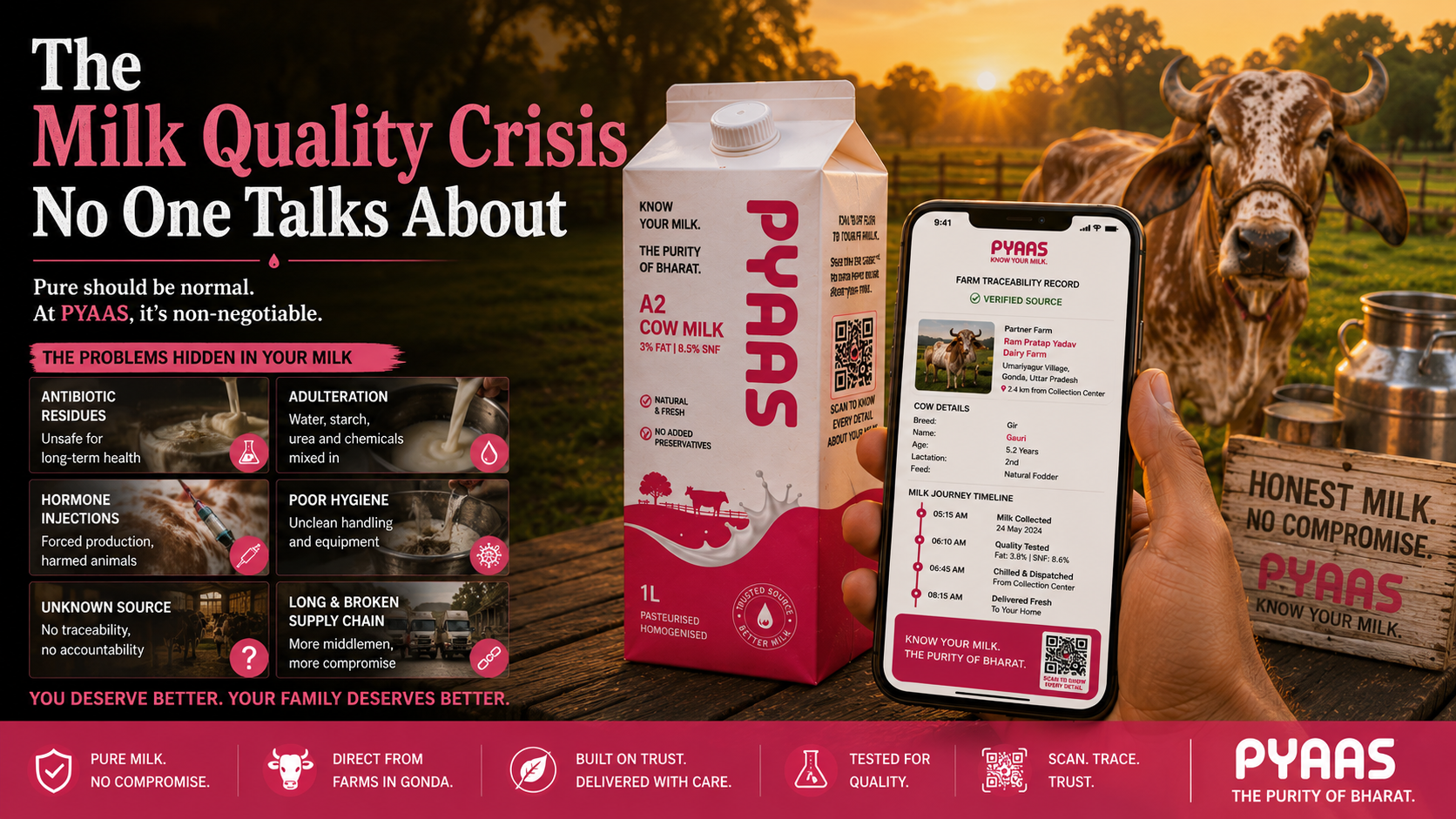
The Milk Quality Crisis No One Talks About
12 August 2026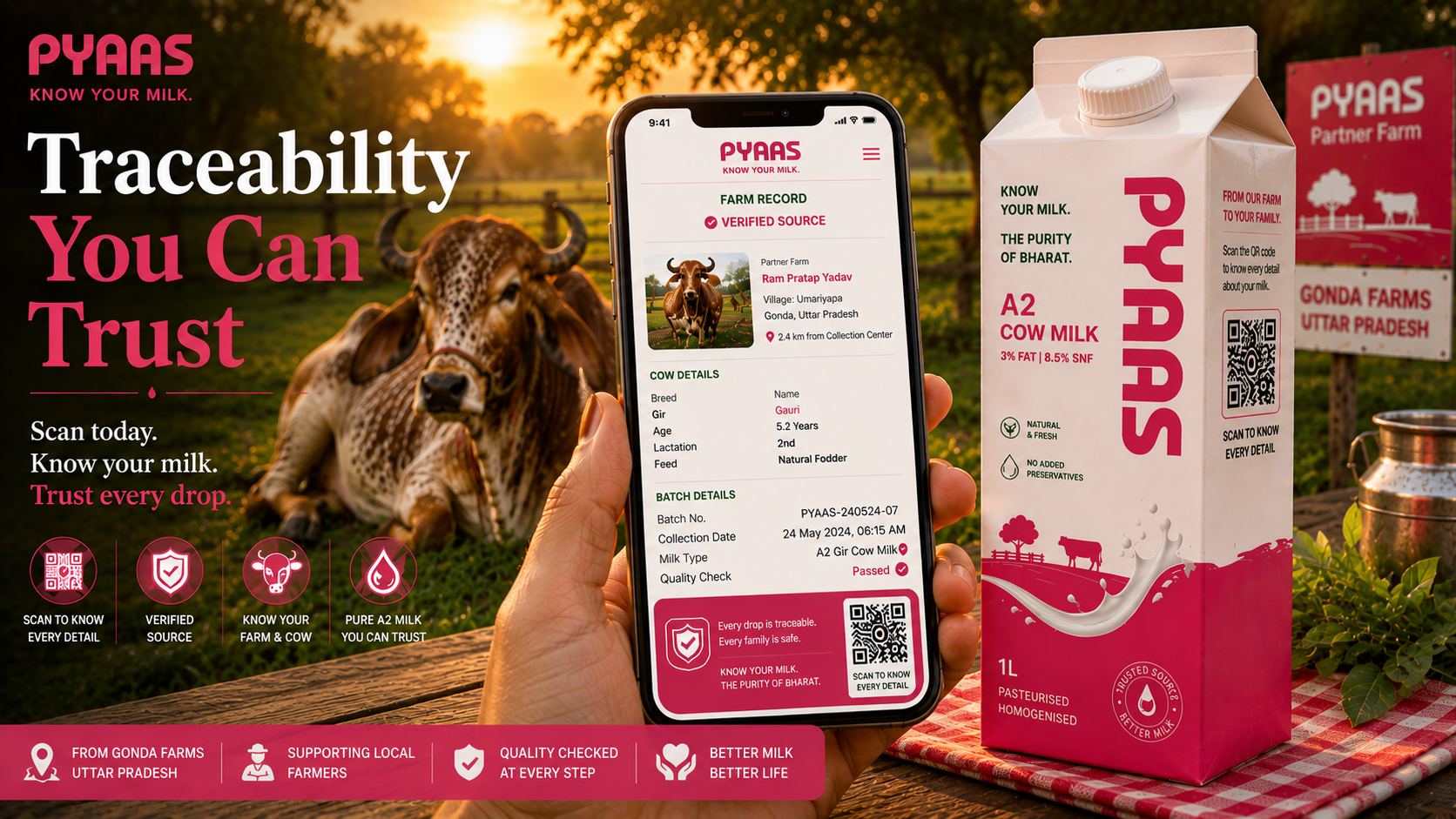
The Data Behind a Safe Glass of Milk
29 July 2026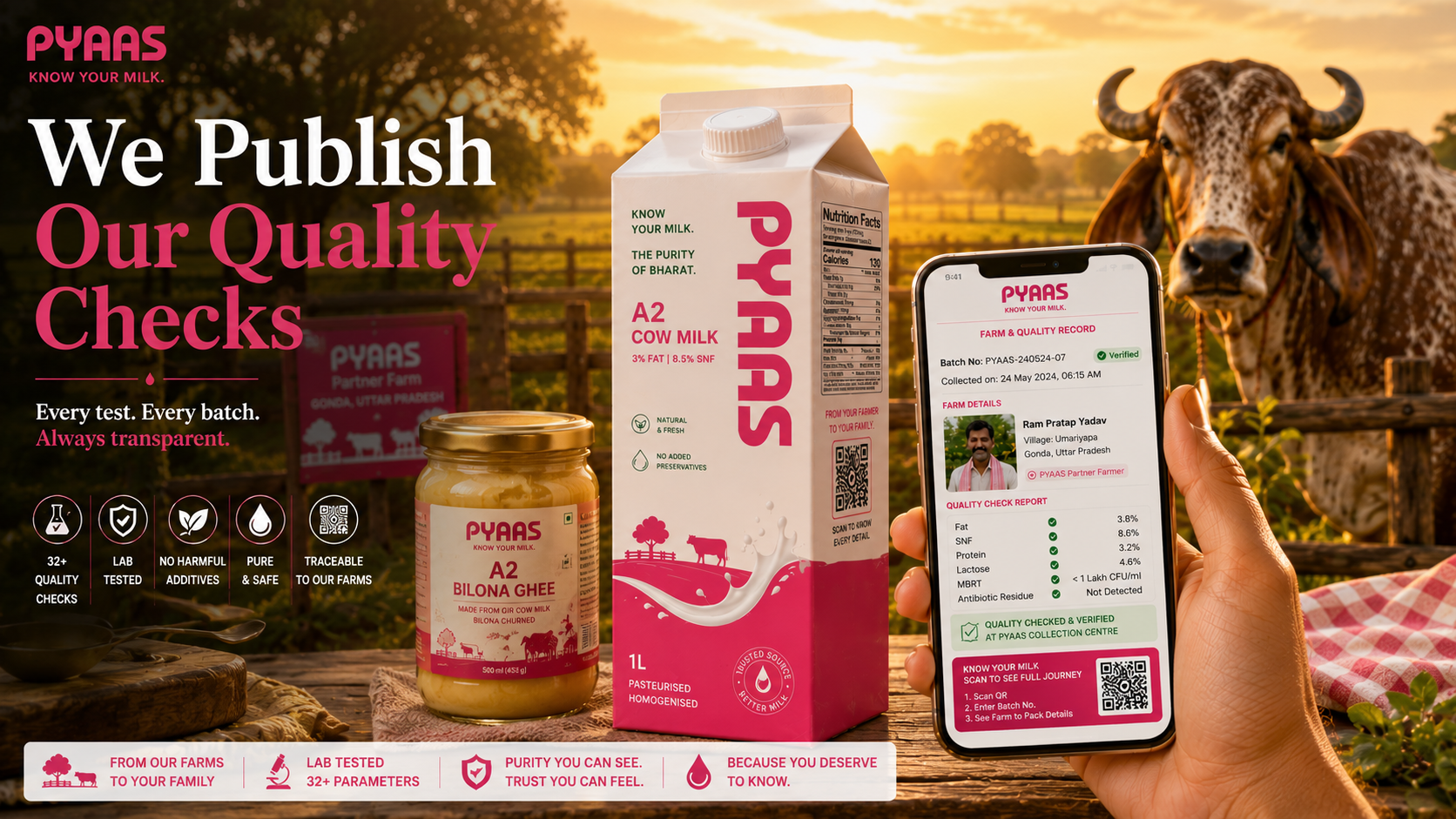
Why PYAAS Publishes Its Quality Checks
26 July 2026