
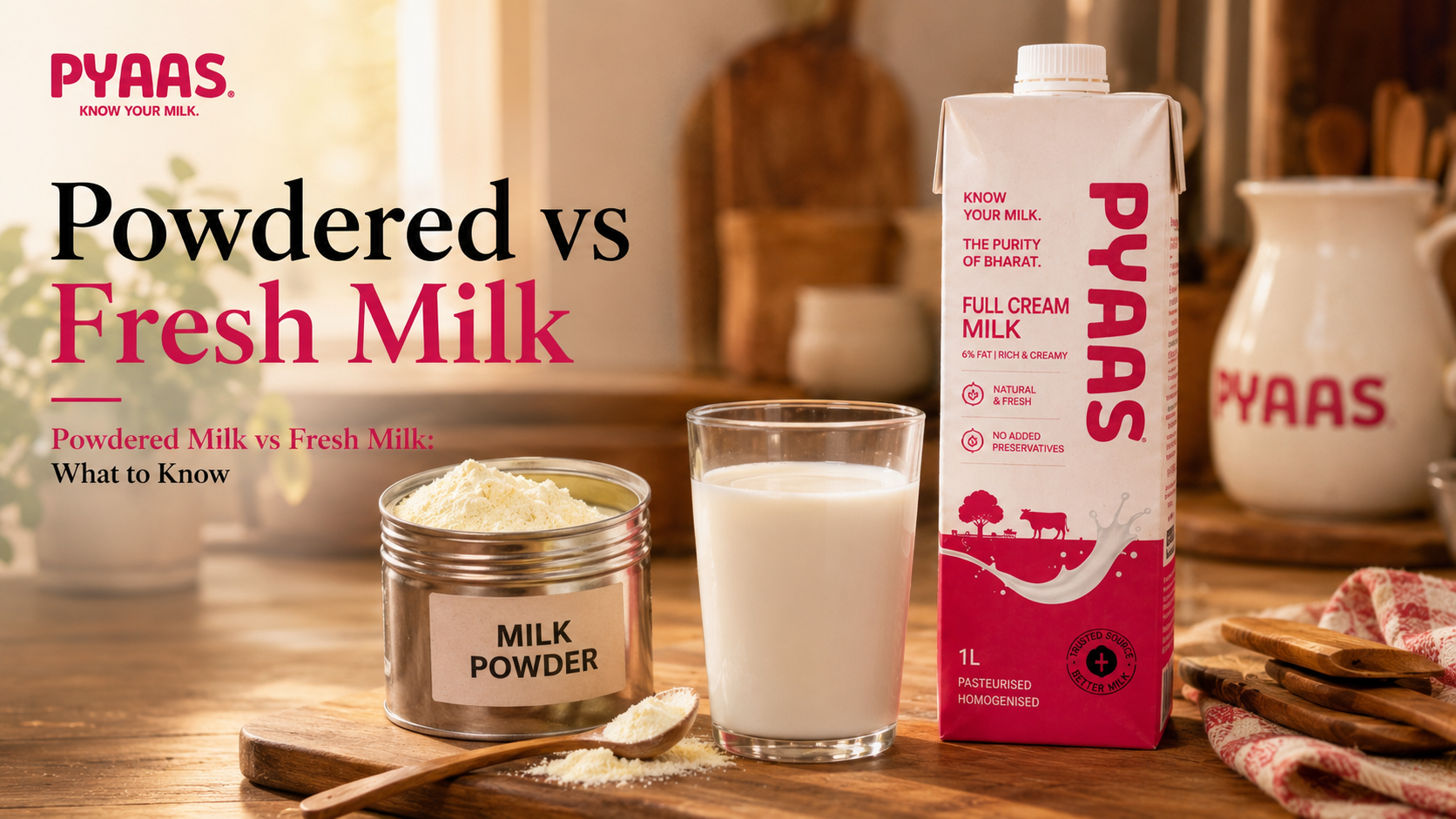
Somewhere in most Indian kitchens sits a tin of milk powder, pulled out when the fresh milk runs low or a recipe calls for it. It feels like a different product entirely from the milk in the fridge, but it is not. The powdered vs fresh milk story is really about one thing: water. Take the water out of fresh milk and you get powder; add clean water back and you get milk again. Understanding what happens in between helps you choose well.
What powdered milk actually is
Milk powder starts life as ordinary fresh milk. That milk is pasteurised, gently concentrated to remove much of its water, and then spray-dried, sprayed as a fine mist into hot air so the remaining moisture evaporates almost instantly, leaving dry milk solids behind. What is left is a shelf-stable powder that can sit for many months.
When you stir that powder into water, you are reconstituting it, rebuilding milk from its dried form. Done with the right ratio and clean water, you get a drinkable milk that is chemically close to where it started, minus a little of what the heat took.
How the two really compare
Here is the honest side-by-side.
- Nutrition: Reconstituted milk keeps most of its protein, calcium and minerals. Some heat-sensitive vitamins dip slightly during drying, but the core nutrition largely survives.
- Taste: This is where fresh pulls ahead. Powder often carries a faintly cooked, flatter flavour, and the fresh, clean note of just-milked milk is hard to recreate from a tin.
- Shelf life and storage: Powder wins comfortably. It travels light, resists spoiling, and does not need a fridge until mixed.
- Convenience: Fresh is ready to pour; powder needs mixing but stores effortlessly.
- Traceability: Fresh milk from a known farm keeps you close to the source. Powder is usually blended from many sources and loses that direct thread.
Neither is a fraud or a wonder. Powder is a clever way to preserve milk; fresh is milk at its most natural. The right pick depends on what you are doing with it.
Where powdered milk genuinely shines
There is a reason milk powder earns its place in the cupboard.
- It is a dependable backup when fresh milk runs out or the delivery is late.
- It travels well, which matters for trips, hostels and remote areas.
- It is useful in baking and certain sweets where concentrated milk solids are wanted.
- It stores for months without refrigeration, cutting waste.
For all these, powder is not a compromise; it is the sensible tool for the job.
Where fresh milk stays ahead
For daily drinking, chai, coffee and setting curd, fresh milk usually delivers a taste and character that reconstituted milk cannot fully match. The flavour is cleaner, the mouthfeel more natural, and the milk is closer to the day it was drawn. If you care where your milk comes from, fresh from a single known source lets you actually trace it, something a blended powder rarely allows. Our piece on milk nutrition facts goes deeper into what that glass is really made of.
A note on honesty and adulteration
One caution worth stating plainly: milk powder is sometimes misused. Because it is cheap and stable, it can be used to bulk up or fake liquid milk that is sold as fresh. That is not a knock on powder itself, which is a legitimate product, but a reason to know your source. If you want to test what you are buying, our guide on how to check milk purity at home walks through simple checks any family can do.
The PYAAS view
PYAAS is built around fresh, traceable milk, so our bias is honest and out in the open. Our fresh A2 cow milk launches in Lucknow from August 2026 and will expand across Uttar Pradesh, and it is designed to reach you close to the day it was milked at our named partner farms in Gonda. Every pack will carry a QR code you scan to see the exact farm, the farmer, and that batch's quality-checked record, our Know Your Milk promise. A2 milk comes only from the A2 cows within a herd, identified cow by cow, never a whole tank stamped A2.
Until the milk reaches your city, our A2 Bilona cow ghee already ships across India today in small batches, made the slow traditional way from that same carefully sourced milk. Powder has its place in a busy kitchen, and we will never pretend otherwise. But when milk is the star of your glass, fresh and traceable is what we stand for.
The honest bottom line
In the powdered vs fresh milk choice, powder is fresh milk with the water removed, and it is a genuinely useful, nutritious backup for storage, travel and baking. Fresh milk wins on taste, character and closeness to its source, which is why it stays the everyday favourite for so many families. Keep powder for the moments it fits, reach for fresh when taste and traceability matter, and above all, know where your milk came from either way.
Health articles are general information, not medical advice. Talk to your doctor about your own diet.
Common questions
Is powdered milk as nutritious as fresh milk?
Reconstituted milk keeps most of its protein, calcium and minerals, so it is genuinely nutritious. The drying process can reduce some heat-sensitive vitamins, and taste changes noticeably. In the powdered vs fresh milk comparison, powder holds up well nutritionally but rarely matches fresh on flavour.
How is powdered milk made?
Fresh milk is pasteurised, concentrated, and then spray-dried, where it is sprayed into hot air so the water evaporates and leaves fine milk powder behind. To drink it, you reconstitute it by mixing the powder back with clean water. It is simply fresh milk with the water removed and later added back.
When should I use powdered milk instead of fresh?
Powdered milk shines when you need long storage, easy transport, or a stable backup that will not spoil, such as during travel or in areas without daily supply. For everyday drinking, chai and cooking where taste matters, most families still prefer fresh milk when they can get it.
One guide a week, on WhatsApp
Short, plain, no spam. Stop any time by replying STOP.