Milk and Acidity: Does Milk Help or Hurt?
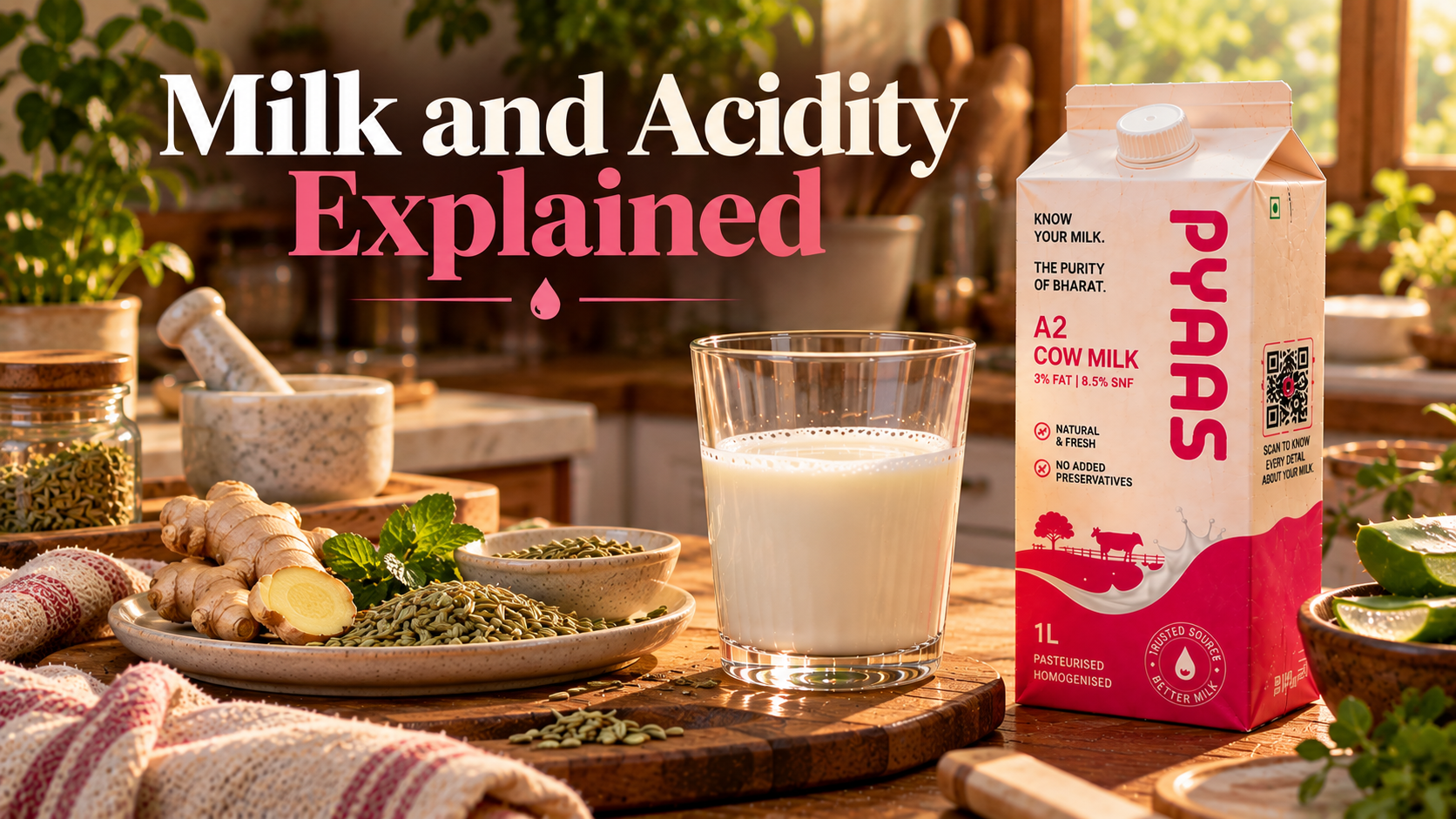
The burn creeps up, and almost on instinct, someone in the family reaches for a glass of milk. It is one of India's most trusted home remedies for a sour, fiery stomach. But the truth about milk and acidity is more nuanced than the folk wisdom suggests: milk can soothe, and it can occasionally backfire, sometimes in the same person on different days. Let us unpack it honestly, without pretending there is one neat answer.
Why milk and acidity feel connected
When acid irritates the stomach or rises into the food pipe, it causes that familiar burning discomfort. Milk is mildly alkaline and coats the stomach lining, so a glass can briefly buffer the acid and take the edge off. That is a real, if temporary, relief, and it is exactly why so many people swear by it in the moment.
The complication comes afterwards. Milk contains protein and fat, and these can prompt the stomach to secrete more acid to digest them. For some people, that means the soothing glass is followed an hour later by a fresh wave of acidity, a rebound effect. So milk is not simply "good" or "bad" for acidity; it is a short-term buffer that may or may not settle things depending on your body and the type of milk.
Individual variation is the whole story
If there is one honest theme here, it is that people differ enormously. Some find a small glass reliably calming with no downside. Others notice that full-fat milk, especially on an empty stomach, triggers discomfort later. Portion size, fat content, what you ate around it, and your own digestion all shape the outcome. Blanket claims that milk "cures acidity" or "always worsens it" are both overstatements.
Things that tend to make milk gentler on acidity
- Smaller portions. A modest glass is less likely to overload the stomach than a large one.
- Not on a totally empty stomach. Pairing milk with a little food can soften the effect.
- Lighter fat content. Very rich, full-fat milk can be slower to digest for some.
- Avoiding it right before lying down. Reclining soon after can encourage reflux.
- Skipping heavy sweeteners or spices added to the milk.
Warm or cold for a burning stomach?
People often ask whether temperature matters. Cold milk can feel more immediately cooling against a burning sensation, which is why some reach for it straight from the fridge. Others find warm milk more settling. Neither temperature addresses the underlying cause, and the difference is largely about comfort. If you are curious about the broader trade-offs, our honest comparison of warm and cold milk covers this in more depth, but for acidity specifically, go by what your own stomach tells you.
Does the type of milk change anything?
Some people who find regular milk hard on digestion explore A2 cow milk, reporting it feels lighter for them. It is worth being honest here: the evidence is still settling, and A2 is about a protein difference, not a treatment for acidity or reflux. If dairy in general troubles your stomach, the issue may be lactose rather than acid, which is a separate matter entirely. Our balanced explainer on what A2 milk is keeps the claims measured. What genuinely matters across the board is fresh, cleanly handled milk you can trust, which is the heart of knowing your milk.
When to stop self-treating and see a doctor
This is the important part. Occasional mild acidity after a heavy meal is common. But if you get frequent heartburn, acidity that wakes you at night, difficulty swallowing, or symptoms that persist for weeks, milk is not the answer, and neither is any home remedy. Those signs deserve a proper medical assessment. Milk should never be used to mask an ongoing problem that needs real diagnosis and care. Please consult a doctor rather than relying on a glass of milk to keep quieting recurring symptoms.
The honest takeaway
Milk and acidity have a genuinely mixed relationship. For many, a small glass offers gentle, temporary relief by buffering acid. For some, richer milk brings a rebound of discomfort later. Neither temperature nor milk type reliably solves the underlying issue. The sensible approach is simple: keep portions modest, notice your own patterns honestly, and treat persistent symptoms as a medical matter, not a milk one.
At PYAAS, we will not pretend milk is a remedy it is not. What we stand behind is honesty about the milk itself, where it comes from, how it was handled, and whether you can trace it. When PYAAS fresh A2 cow milk launches in Lucknow from August 2026, every pack will carry a QR code showing the exact partner farm and that batch's quality-checked record. Whether milk soothes your stomach or not is personal, but the trust behind the glass is something we make sure of.
Written by
PYAAS
PYAAS is an honest, traceable Indian dairy brand from Gonda, Uttar Pradesh.
More from PYAASCommon questions.
Does milk help with acidity?
For some people, milk offers temporary relief by briefly buffering stomach acid, which is why a glass can feel soothing in the moment. However, milk can also prompt the stomach to produce more acid afterwards, so the relief may be short-lived. The effect varies a lot from person to person.
Can milk make acidity worse?
Yes, for some. Full-fat milk in particular can be slower to digest and may trigger rebound acid an hour or so later. If you notice milk and acidity go hand in hand for you, smaller portions or a lighter option may sit better, and persistent symptoms deserve a doctor's advice.
Is cold or warm milk better for acidity?
Cold milk can feel more immediately soothing to a burning sensation, while some prefer warm milk as it feels settling. Neither reliably fixes the underlying cause, and individual variation is large. Notice what your own body does rather than following a blanket rule.
Get the next one in your inbox.
The occasional note on milk, ghee, and how we work. Plain words, no hype, and you can leave any time.