Why PYAAS Partners With Farms Instead of Owning Them
When people hear that I am building a dairy brand, they picture the same thing: a big farm with the PYAAS name painted on the gate, our own land, our own cows. It is the tidy story, and for a long time it was the default assumption about how a serious dairy company should be built. We chose the opposite. PYAAS does not own a single cow. We partner with the farmers who do. I want to explain why, because that decision sits at the heart of everything we are trying to build.
The choice every dairy founder faces
Early on, every dairy founder runs into the same fork in the road. You can go the vertical ownership route — buy the land, build the shed, own the herd, and control the whole chain from grass to glass. Or you can build a dairy farm partnership model, where you work with existing farmers, invest in the relationship rather than the real estate, and earn the right to put your name on their milk. Both can produce good milk. They are not the same kind of company.
Ownership looks like control on a spreadsheet. In practice, owning a farm means becoming a farm operator first and a brand second — managing labour, veterinary care, feed, breeding and the thousand daily judgement calls that a good dairy farmer spends a lifetime learning. I did not start PYAAS to out-farm people who have been farming for generations. I started it to close the trust gap between the farm and the family. Those are two very different problems.
Why PYAAS chose partnership over ownership
Farmers know their animals better than we ever could
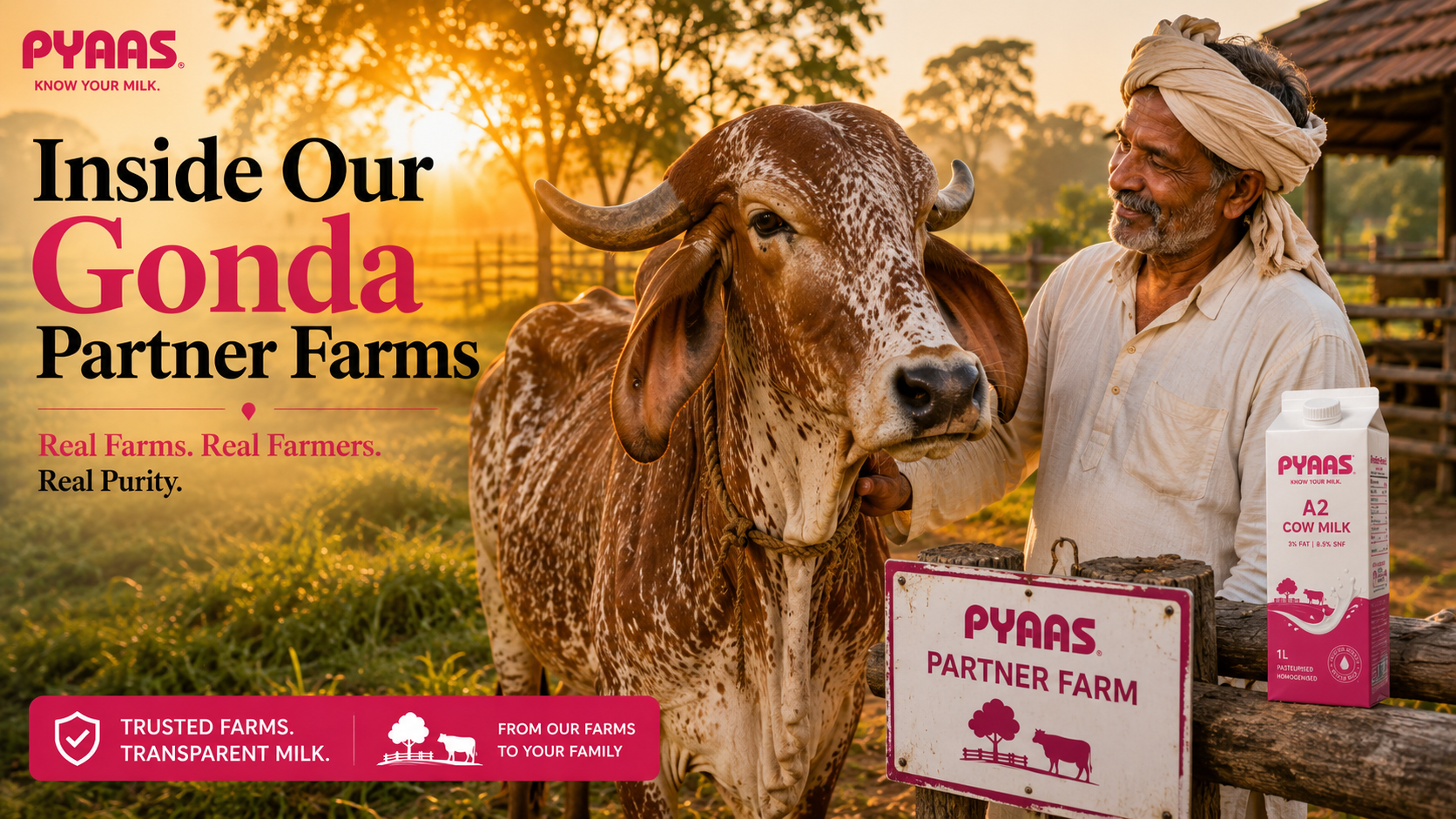
At Sri Radha Mohan Dairy Farm in Gonda, Uttar Pradesh, a farmer named Ram looks after a herd of 76 cows — Holstein Friesian and Sahiwal — and the A2 milk we care about comes from the A2 cows in that herd. Ram can tell which cow is off her feed before any sensor would flag it. That instinct is not something a brand can buy or install. If I bought the farm and put a salaried manager in his place, I would be trading away the single most valuable thing on it. A partnership lets me keep it.
Capital should go into milk, not into real estate
Owning farms ties up enormous capital in land and infrastructure — money that then cannot go into the cold chain, quality checking, traceability technology or fair prices for farmers. A partnership model lets PYAAS put its capital where it actually improves the milk in your glass. We would rather invest in the systems that prove quality than in fences.
The economics have to work for the farmer, or nothing holds
India's dairy problem is not a shortage of good farmers. It is that too many of them are the weakest link in a chain that captures the value and hands them the risk. A partnership only works if the farmer earns more and worries less by working with us than without us. When ownership turns the farmer into an employee, that alignment quietly disappears. When partnership makes the farmer a named, paid, respected source, it holds. You can read more about how we choose the farms we work with.
What a real partnership actually requires
I want to be honest: partnership is harder than ownership, not easier. Ownership lets you command. Partnership means you have to earn trust every single day, on both sides. For it to be real, and not just a nicer word for procurement, a few things have to be true.
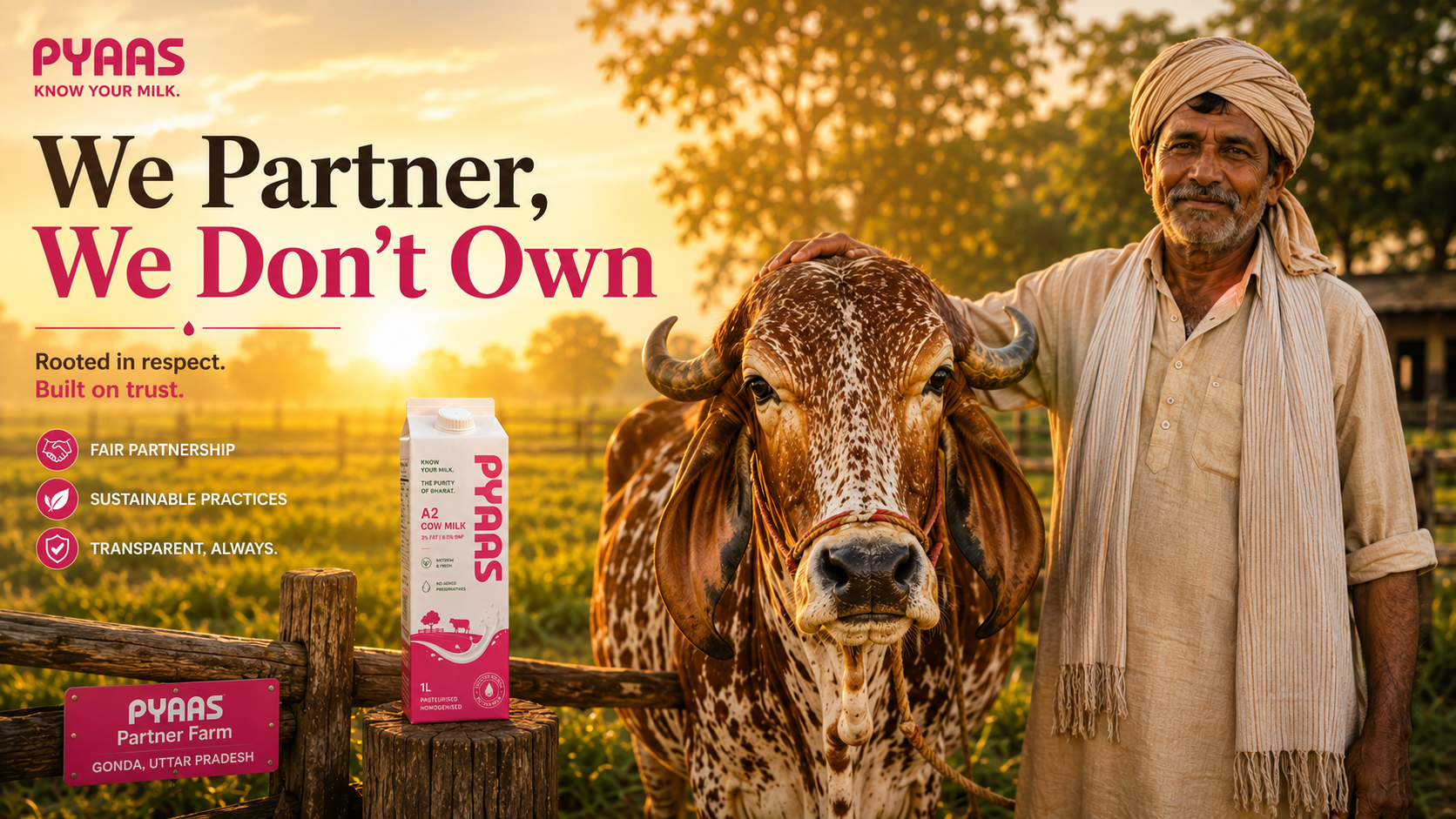
- We name our partner farms in public — Sri Radha Mohan Dairy Farm, Gonard Dairy (farmer Harsh Singh) and Ranjeet Singh Dairy Farm in Gonda — because a partner you hide is not a partner.
- Every pack is traceable by QR to the farm, the farmer and that batch's quality record, so the farmer's name and our promise stand or fall together.
- Quality is checked on our side, never simply assumed, so a partnership never becomes an excuse to look away.
- The relationship is long-term rather than a spot purchase, so the farmer can plan and invest alongside us.
That last point matters most. Anyone can buy milk on a good day. Building a real dairy farm partnership model means committing to the same farms through the hard days too.
What we will never compromise, whoever owns the cow
Choosing partnership over ownership does not mean loosening our standards — it means holding them through relationship instead of command. Our A2 Bilona cow ghee ships across India today, made in small batches from this milk. Fresh A2 cow milk is next: PYAAS launches in Lucknow from August 2026 and will expand across Uttar Pradesh from there. Whether the milk becomes ghee or reaches your home fresh, the rule is the same — you should be able to know your milk down to the farm and the farmer who produced it.
Where this goes next
We are building toward a ₹100 crore dairy brand, and I am convinced it can be done without owning a single farm — in fact, that it can only be done honestly by not owning them. The future I want for PYAAS is a network of named, thriving partner farms across Uttar Pradesh and beyond, each one proud to have its name on the pack, each farmer better off for working with us. Ownership would make PYAAS look bigger on paper. Partnership is what will make it worth trusting, and I would rather build the second kind of company. — Aryan Sharma, Founder & CEO of PYAAS.
Written by
Aryan Sharma
Aryan Sharma is the Founder & CEO of PYAAS, an independent, transparency-first dairy brand based in Uttar Pradesh. Every PYAAS pack is traceable to its farm by QR — Know Your Milk.
More from Aryan SharmaCommon questions.
Does PYAAS own its own dairy farms?
No. PYAAS does not own any farms or cows. We use a partnership model, working with named farms in Gonda, Uttar Pradesh — Sri Radha Mohan Dairy Farm, Gonard Dairy and Ranjeet Singh Dairy Farm — and every pack is traceable by QR to the farm, the farmer and that batch's quality record.
What is a dairy farm partnership model?
In a dairy farm partnership model, a brand works with existing farmers instead of buying land and cattle of its own. The farmer keeps ownership of the herd and the expertise, while the brand invests in the relationship, quality checking, the cold chain and traceability. PYAAS uses this model so its capital goes into the milk and the farmer, not into real estate.
Why doesn't PYAAS just build its own farm?
Aryan Sharma's view is that owning a farm would make PYAAS a farm operator first and a brand second, competing with people who have farmed for generations. Partnership keeps that expertise where it belongs, shares value with the farmer, and lets PYAAS focus on trust and traceability. It is harder than ownership, but it is more honest.
Get the next one in your inbox.
The occasional note on milk, ghee, and how we work. Plain words, no hype, and you can leave any time.
Keep reading.
Red Sindhi & Rathi: Lesser-Known Indian Dairy Breeds
24 August 2026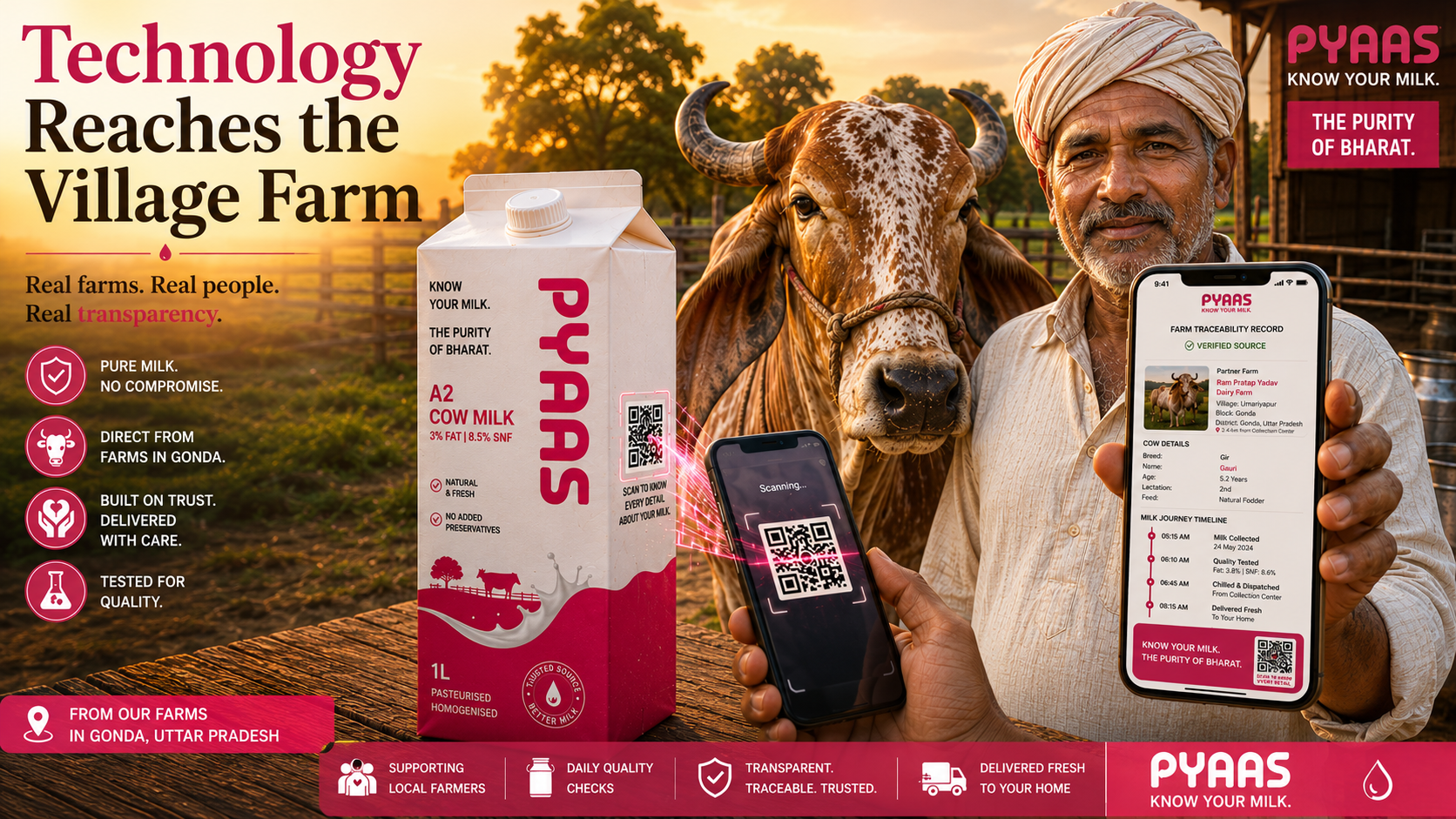
How Technology Reaches the Village Dairy Farm
12 August 2026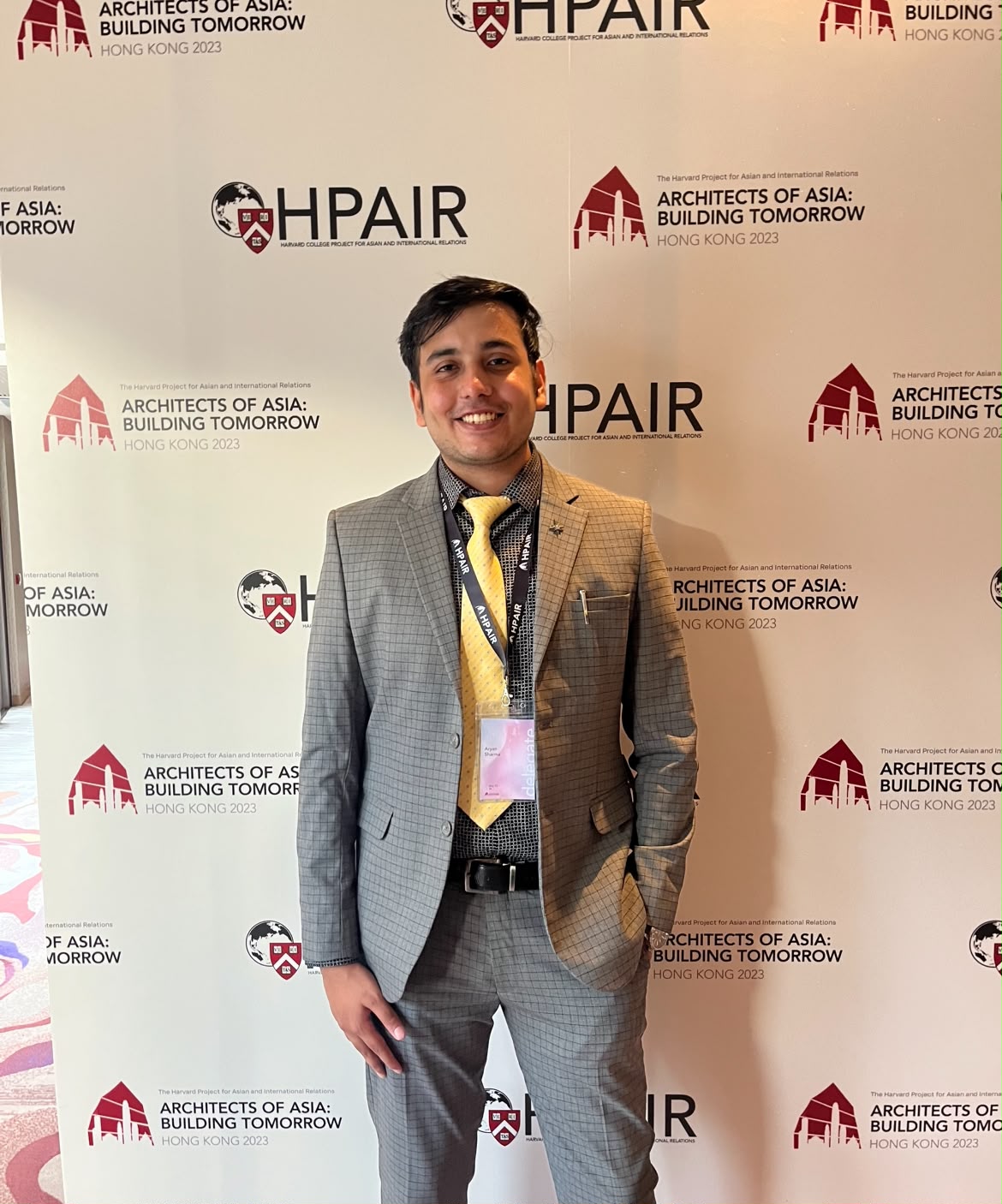
What I Learned at Sri Radha Mohan Dairy Farm — Aryan Sharma
28 July 2026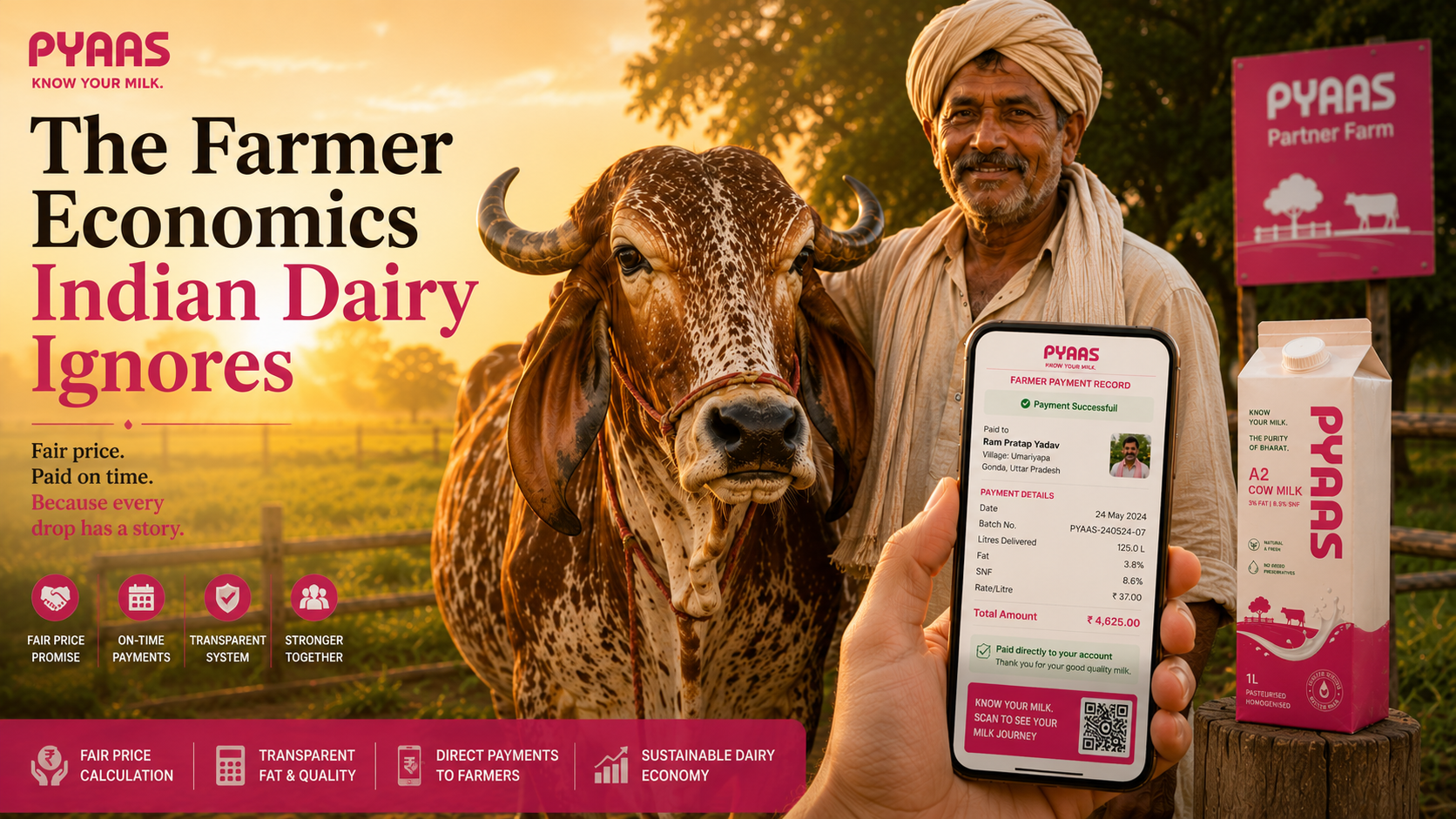
The Farmer Economics Problem Indian Dairy Ignores
26 July 2026