Milk Protein Explained: Casein and Whey
Pour a glass of milk and you are holding two proteins that could not be more different from each other. Together they make up almost all the protein in dairy, yet they behave like opposites. Understanding milk protein casein whey is one of the most useful things you can learn about the food you drink every day, because it explains everything from why paneer holds together to why the A2 conversation exists at all.
The two proteins inside every glass
Roughly 80 percent of the protein in cow milk is casein, and about 20 percent is whey. That 80/20 split is remarkably consistent across breeds and farms. What changes between good and ordinary milk is not usually the ratio but the freshness, the handling, and the story behind the animal it came from.
Casein is the strong, structural protein. It clusters into tiny bundles called micelles that also carry calcium and phosphorus, which is part of why milk and calcium go hand in hand. Whey is the delicate, water-soluble protein that stays dissolved in the liquid. When you split milk apart, casein and whey go their separate ways.
You have already seen them separate
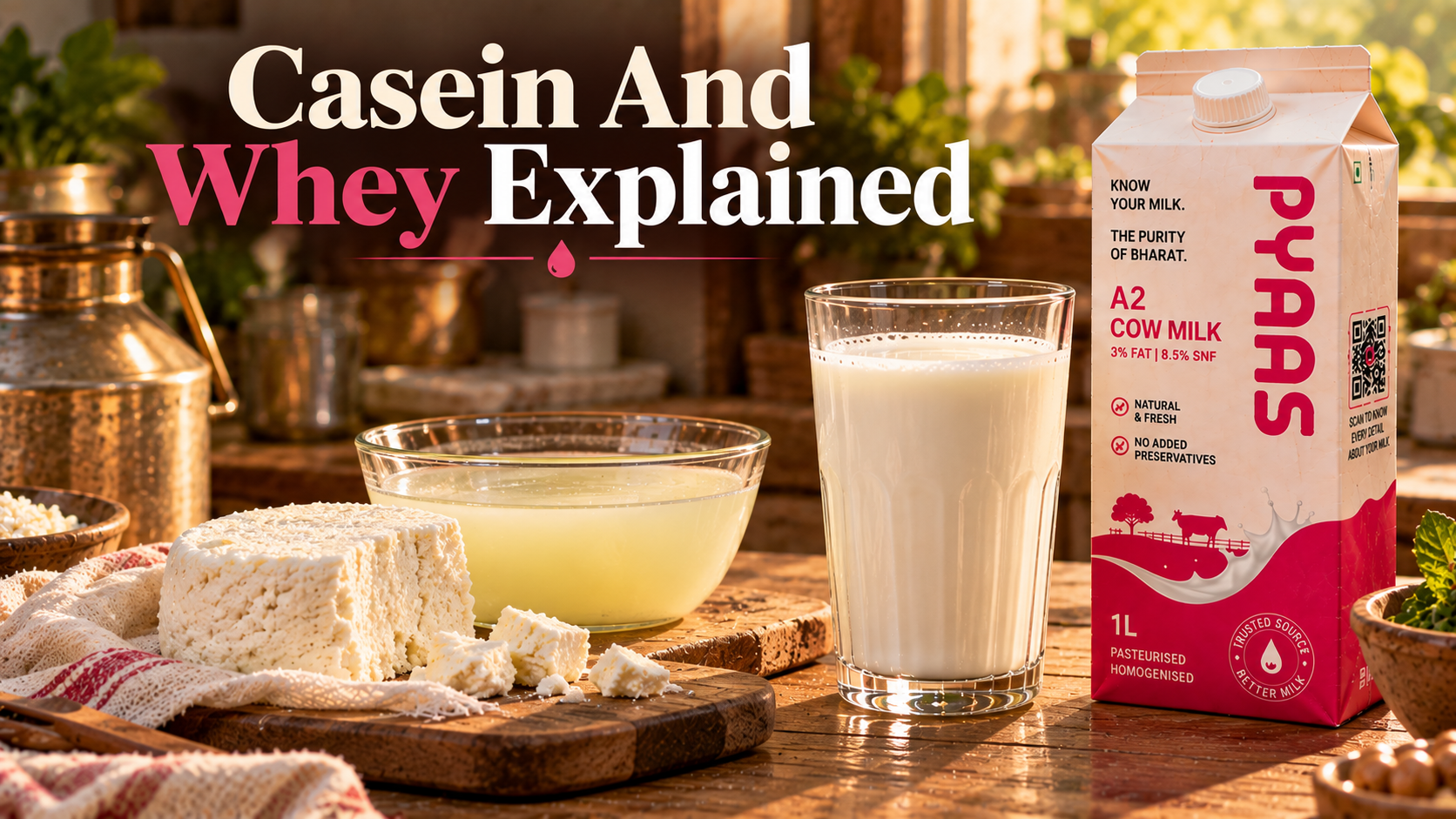
Every home cook has watched this happen. Add lemon or vinegar to hot milk to make paneer, and the milk splits: the white solids you press into a block are mostly casein, and the pale liquid that drains through the cloth carries the whey. That liquid is not waste. It is protein-rich and gentle, and traditionally it goes straight back into kneading roti dough or cooking dal.
Fast whey, slow casein
The most practical difference between the two is speed. Whey digests quickly. Within an hour or so of drinking milk, whey amino acids are already circulating, which is why whey is popular in post-workout drinks. Casein does the opposite. In the acidic environment of the stomach it clumps and forms a soft gel, so it releases its amino acids slowly over several hours.
This slow-release quality is one honest reason a glass of warm milk at night has stayed part of Indian routine for so long. It is not magic and it is not a sleeping pill; it is simply a protein that keeps your body fed gently through the night. Together, the fast and slow proteins give milk a rounded, complete amino-acid profile that few single foods match.
- Whey: fast-digesting, water-soluble, high in the amino acids that support muscle repair.
- Casein: slow-digesting, forms curds, carries much of milk's calcium, gives paneer and cheese their structure.
- Together: a complete protein with all essential amino acids in useful amounts.
Where A2 fits into the casein story
Here is the part most people get tangled up in. A2 milk is not about casein versus whey at all. It is about one specific piece of the casein group. Beta-casein, one of the casein proteins, exists in two common forms in cow milk: A1 and A2. The difference is a single amino acid in a long chain, and that tiny change alters how the protein breaks down during digestion.
Many people find A2 milk sits easier in the stomach, and some families switch to it after years of feeling heavy on ordinary milk. But it is worth being clear-eyed: the research is still developing, and A2 is not a cure for lactose intolerance. Lactose is the milk sugar, an entirely separate thing from protein. If you want the full picture, we walk through it in our guide to A2 milk, its benefits and myths, and compare the two forms side by side in A1 vs A2 milk.
One thing PYAAS will never do is tell you a whole herd is "all A2". A2 is a per-animal genetic trait, identified cow by cow within a herd. That kind of honesty matters more than a marketing badge.
How much protein is really in your glass
A cup of cow milk carries roughly 7 to 8 grams of protein, most of it casein, the rest whey. That is a meaningful contribution to a day's needs, and unlike many protein sources it arrives alongside calcium, vitamin B12 and a little natural fat that helps your body use it all. If you want to see the full breakdown of what else is in there, our piece on milk nutrition facts lays it out plainly.
Does heating change the protein?
Gently, yes, and mostly for the better in a home kitchen. Boiling milk denatures some whey, which is why a skin forms on top and why heated milk curdles more easily with acid. This does not destroy the nutrition; it just unfolds the proteins. Casein is more heat-stable, which is why milk can be simmered for hours into khoya without splitting.
Why the source still matters
You can read every label in the world, but protein quality also rests on how the milk was produced and handled. Milk from a single, known farm, cooled quickly and traced from that farm to your pack, protects the delicate whey and keeps the casein clean and fresh. This is the whole reason PYAAS puts a QR code on every pack: scan it and you see the exact farm, the farmer, and that batch's quality-checked record. Protein you can name the source of is protein you can trust.
So the next time you hold a glass of milk, remember you are holding a small, balanced system: quick whey and patient casein, working together the way they have for as long as people have kept cows. Knowing your casein from your whey is a quiet first step toward the thing PYAAS cares about most, which is simply knowing your milk.
Written by
PYAAS
PYAAS is an honest, traceable Indian dairy brand from Gonda, Uttar Pradesh.
More from PYAASCommon questions.
Is casein or whey better for you?
Neither is universally better; they simply behave differently. Whey digests quickly and is rich in essential amino acids, while casein digests slowly and releases amino acids over hours. A balanced glass of milk gives you both, which is one reason whole milk protein has been valued for generations.
Does A2 milk have different protein than regular milk?
The total milk protein casein whey balance is broadly similar. The difference is in one fraction of the casein: beta-casein, which comes in A1 and A2 forms. A2 milk carries the A2 form, which some people say feels gentler, though the science is still settling.
Is whey the liquid left after making paneer?
Yes. When you curdle milk to make paneer or chhena, the solid curds are mostly casein and the greenish liquid that drains away carries much of the whey protein. That whey is nutritious, which is why many families use it in dough or dal instead of throwing it out.
Get the next one in your inbox.
The occasional note on milk, ghee, and how we work. Plain words, no hype, and you can leave any time.