Milk for Healthy Skin: What Actually Helps
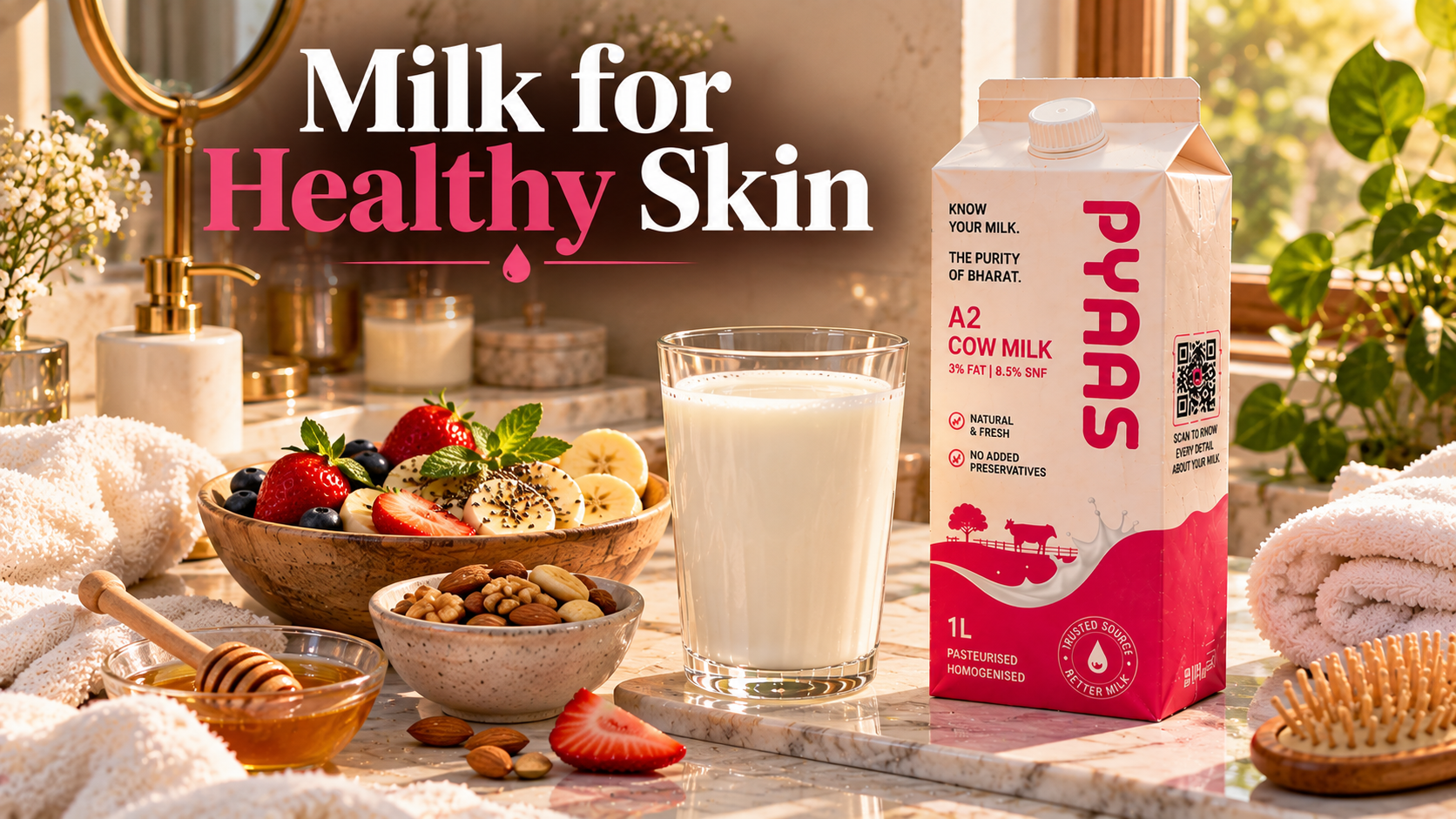
Scroll through beauty advice and milk shows up everywhere, in glowing-skin promises, DIY face packs, and grandmother's tips passed down for generations. Some of it holds up, and some is charming folklore. If you are wondering about milk for skin, the honest answer separates into two very different questions: what milk does from the inside as food, and what it does when you smear it on your face. They are not the same, and only one has much evidence behind it.
Milk for skin from the inside: nutrition that genuinely matters
Skin is an organ, and like the rest of your body it is built and maintained from the nutrients in your overall diet. Milk contributes several that play a supporting role. Protein supplies amino acids the body uses for tissue repair and structure. Milk also carries vitamin A precursors, some B vitamins, and minerals that fit into the broader machinery of skin health, plus fluid that adds to daily hydration.
The honest framing is important: no single food is a magic glow switch, and milk is not an exception. Healthy skin reflects a varied, balanced diet, enough sleep, water, and sun protection, far more than any one glass. Milk can be a genuinely useful part of that picture, especially for protein and calcium, but it works as a team player, not a solo hero. Our guide to milk nutrition facts lays out exactly what those nutrients are, without the beauty-industry hype.
What actually supports skin, honestly
- Adequate protein from milk, dairy, pulses, and other sources for repair and structure.
- A varied diet rich in fruits and vegetables for the vitamins and antioxidants skin relies on.
- Hydration across the day, to which milk contributes alongside water.
- Sleep and stress management, which show on the skin more than most foods.
- Sun protection, arguably the single biggest factor in how skin ages.
The topical myths: milk on your face
Applying milk directly to the skin is a beloved home ritual, and it is worth being straight about it. The dramatic claims, that milk lightens skin tone, erases dark spots, or reverses ageing, are largely unproven. Milk does contain lactic acid, a mild exfoliant, so a face pack might leave skin feeling momentarily smooth or clean, and the coolness can feel pleasant. But that is a gentle cosmetic effect, not a transformation, and it will not change your natural complexion.
A few honest cautions: if you have acne-prone or sensitive skin, applying dairy topically may not suit you, and it is wise to patch test first. Chasing skin "whitening" through milk is chasing a myth, and an unhealthy beauty standard at that. Enjoy a milk-based ritual if it feels nice, but keep expectations realistic.
Does milk cause or clear breakouts?
You may have heard both that milk causes acne and that it clears skin. The truth is unsettled. Some studies suggest a possible link between certain dairy intake and breakouts in some individuals, while others find little effect, and the evidence is still developing. What is fair to say: if you personally notice your skin reacts to dairy, that observation is worth respecting, and reducing intake to see if it helps is reasonable. But there is no blanket rule that milk ruins or rescues everyone's skin. Individual variation, again, is the honest headline.
Quality matters more than marketing
If milk is going to be part of how you nourish your skin from within, the sensible move is to focus on clean, fresh, trustworthy milk rather than exotic promises. Whether milk is A1 or A2 does not make it a skincare product; A2 simply refers to a protein type that many people find easier to digest, and the science there is still settling. If digestion is your reason for choosing it, our measured explainer on what A2 milk is keeps the claims honest. Far more important than any beauty label is knowing your milk is fresh, cleanly handled, and traceable, the everyday quality that supports your whole body, skin included.
The honest takeaway
Milk for skin is real in a modest, sensible way: as part of a balanced diet, its protein and nutrients support the body that grows and repairs your skin. As a topical miracle, it mostly is not, the whitening and anti-ageing claims do not hold up, even if a milk ritual feels pleasant. Beautiful skin comes from the boring, reliable basics: varied nutrition, hydration, sleep, and sun care. Milk is a helpful supporting player in that story, no more and no less.
At PYAAS, we would rather be honest than sell you a glow-in-a-glass fantasy. What we genuinely promise is transparency about the milk itself. When PYAAS fresh A2 cow milk launches in Lucknow from August 2026, every pack will carry a QR code showing the exact partner farm and that batch's quality-checked record. Nourishing your skin is a whole-lifestyle project; giving you milk you can actually trust is the part we take care of.
Written by
PYAAS
PYAAS is an honest, traceable Indian dairy brand from Gonda, Uttar Pradesh.
More from PYAASCommon questions.
Does drinking milk improve your skin?
Milk provides protein, calcium, and vitamins that support overall health, and healthy skin benefits from a balanced diet as a whole. No single food is a guaranteed glow switch, though. The honest view on milk for skin is that it can be one helpful part of good nutrition, not a standalone beauty cure.
Is applying milk on the face good for skin?
Milk face packs are a popular tradition and some people enjoy the mild, cooling feel, but the dramatic whitening or anti-ageing claims are largely unproven. Any gentle cleansing effect is modest. If you have sensitive or acne-prone skin, patch test first and do not expect miracles from topical milk.
Which nutrients in milk matter for skin?
Protein supports the building blocks of skin, while nutrients like vitamin A, some B vitamins, zinc-supporting components, and overall hydration play supporting roles. In terms of milk for skin, these contribute as part of a varied diet rather than working as an isolated treatment.
Get the next one in your inbox.
The occasional note on milk, ghee, and how we work. Plain words, no hype, and you can leave any time.