How the PYAAS QR-to-Batch-Record System Works
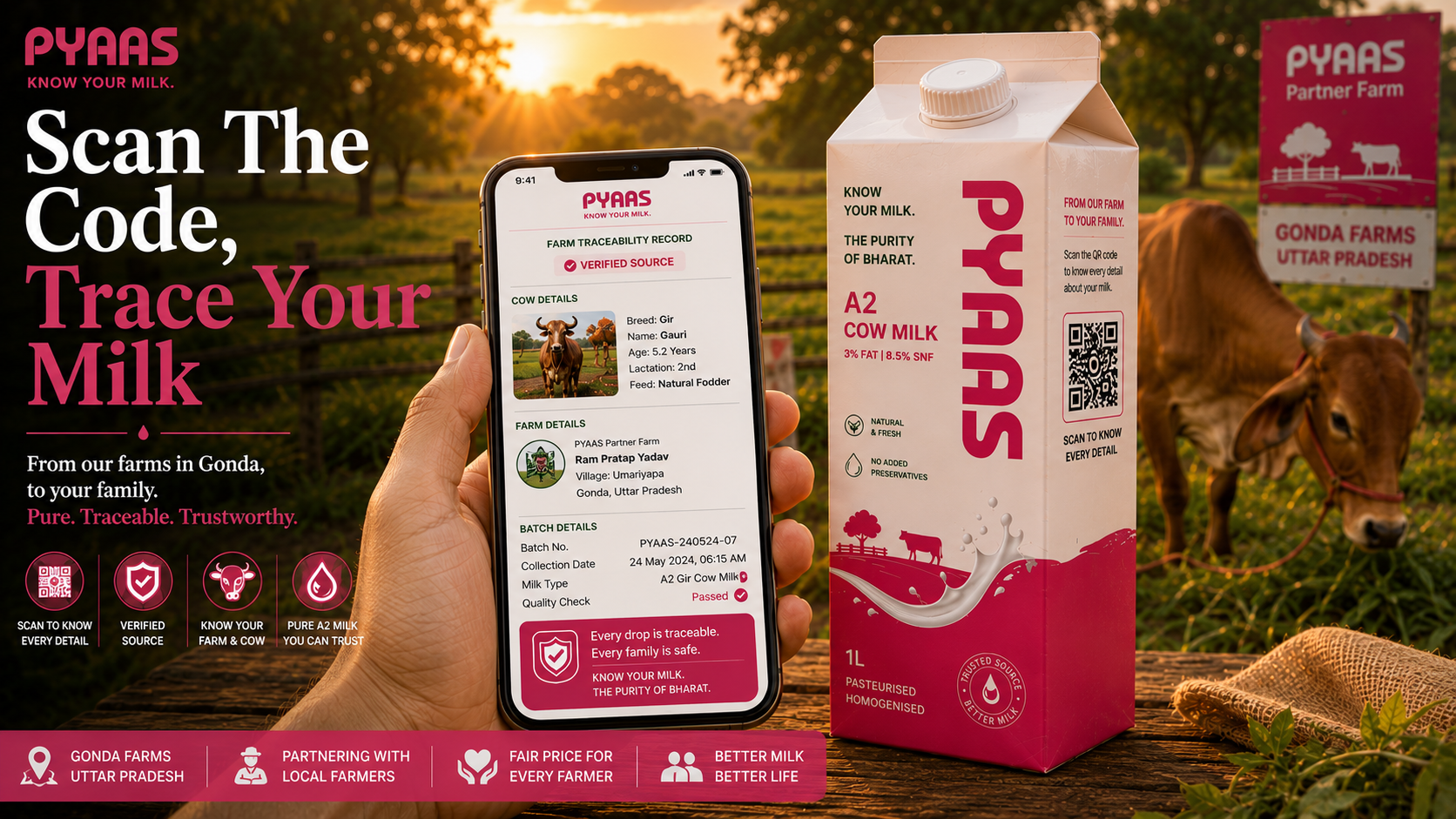
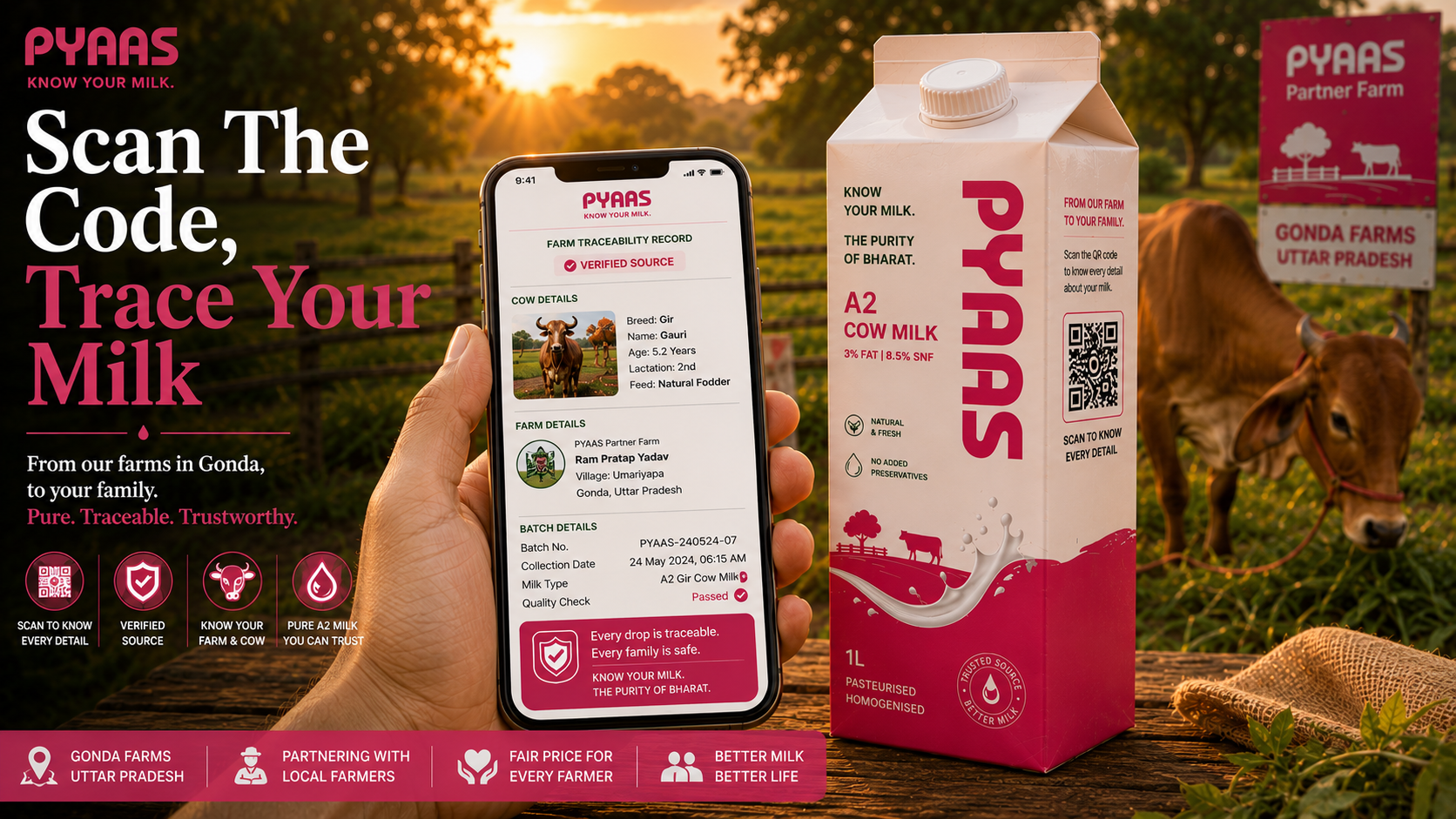
Every PYAAS pack has a QR code tucked into the corner. It is small, easy to miss, and it is the single most important thing we make. I am Kushagra Shekhar Kaushik, Founder and CTO of PYAAS, and I spend most of my days on the system that sits behind that little square. This is how it works, step by step, from the pack in your hand to the record of the exact batch it came from.
Most dairy asks you to trust a word printed on the front of the carton. We wanted to do the opposite — hand you the evidence and let you decide. So we built a QR code milk batch record system that turns one scan into a full account of where your milk or ghee came from. No login, no app to install, no marketing in the way.
What a batch record actually is
Before the walkthrough, it helps to know what you are scanning toward. A batch is a specific run of milk or ghee, from a specific farm, on a specific day. It is not a brand, not a region, not an average. When milk is pooled from thousands of farms and mixed, the very idea of a batch disappears — nobody can honestly tell you where your litre began. Because PYAAS milk is single-origin from named farms, every batch keeps its identity, and the record is simply the truthful paper trail for that one run.
What happens the moment you scan
Here is the walk from pack to record, exactly as it runs today on our A2 Bilona cow ghee, and exactly as it will run on our fresh A2 milk when it launches.
1. You scan the code
Open any phone camera and point it at the QR code on the pack. There is nothing to download. The code resolves to a web page that is unique to that batch, so two packs produced on two different days open two different records.
2. The pack introduces its farm
The first thing you see is the source — the named farm the batch came from, in Gonda, Uttar Pradesh. For example, Sri Radha Mohan Dairy Farm, a 76-cow herd of Holstein Friesian and Sahiwal cattle, where our A2 milk comes from the A2 cows in the herd. You also meet the farmer who milked them, Ram, by name — not as a stock photo.
3. The batch shows its own quality check
Next comes the record for that specific batch: when it was produced and the quality checks it passed before it was allowed to be packed. This is deliberately batch-level, not a certificate from last year framed on a wall. You are looking at the run that is actually in your hand.
4. You decide
That is the whole point of the flow. You are not asked to believe a slogan. You see the farm, the farmer and the batch, and you make up your own mind. We call it Know Your Milk because knowing should be the default, not a favour.
What lives inside the record
- The farm: the named dairy the batch came from, and where in Gonda it sits.
- The farmer: the real person who milks the herd — Ram at Sri Radha Mohan Dairy Farm, Harsh Singh at Gonard Dairy, or Ranjeet Singh at Ranjeet Singh Dairy Farm.
- The herd: Holstein Friesian and Sahiwal cattle, with the A2 milk coming from the A2 cows in the herd.
- The batch: the production date and the quality checks that run cleared before packing.
What you will not find is a fabricated number or a claim we cannot stand behind. If we cannot verify something, it does not go on the record. An honest record with less on it beats an impressive one we made up.
How the record is built, before you ever scan it
A QR code is only as honest as the data behind it, so most of the engineering lives upstream of the scan. When a batch is produced at a partner farm, its details — the farm, the farmer, the date, the quality checks — are captured and tied to a unique batch identity. The QR printed on that pack simply points to that identity. Nothing about the record is written after the fact to look good; the pack carries a pointer to a record that already exists.
My rule as Founder & CTO is that the technology should add proof, not friction. If a family has to fight an app just to see where their milk came from, we have failed. One scan, one page, one truthful record — that is the standard I hold the system to.
Where this goes next
Today the QR-to-batch-record system runs on our A2 Bilona cow ghee, which ships across India. When PYAAS fresh A2 milk launches in Lucknow from August 2026 and expands across Uttar Pradesh, every pack will carry the same code and the same promise. As we build toward the honest dairy brand we set out to make, I want the batch record to grow richer, never thinner — more of the story, always verifiable, always yours to check. If you want to see the farms these codes point to, they are all here.
— Kushagra Shekhar Kaushik, Founder & CTO, PYAAS
Written by
Kushagra Shekhar Kaushik
Kushagra Shekhar Kaushik is the Founder & CTO of PYAAS, an independent, transparency-first dairy brand based in Gonda and Lucknow, Uttar Pradesh, building the technology that makes every pack traceable to its farm by QR.
More from Kushagra Shekhar KaushikCommon questions.
How does the PYAAS QR code milk batch record work?
Scan the QR code on any PYAAS pack with your phone camera — no app needed. It opens a page unique to that batch showing the named farm in Gonda, the farmer who milked the herd, the breed and that batch's quality checks. Our A2 Bilona ghee ships with this today, and our fresh milk will carry it when it launches.
Do I need to download an app to scan the code?
No. The QR code opens in any standard phone camera and loads an ordinary web page. We keep it app-free on purpose, so seeing where your milk or ghee came from takes one scan rather than a sign-up.
Is every pack traced to a different batch record?
Yes. A batch is a specific run from a specific farm on a specific day, and its QR points to a record unique to that run. Two packs from different days open two different records, because PYAAS milk is single-origin and never pooled.
Get the next one in your inbox.
The occasional note on milk, ghee, and how we work. Plain words, no hype, and you can leave any time.
Keep reading.
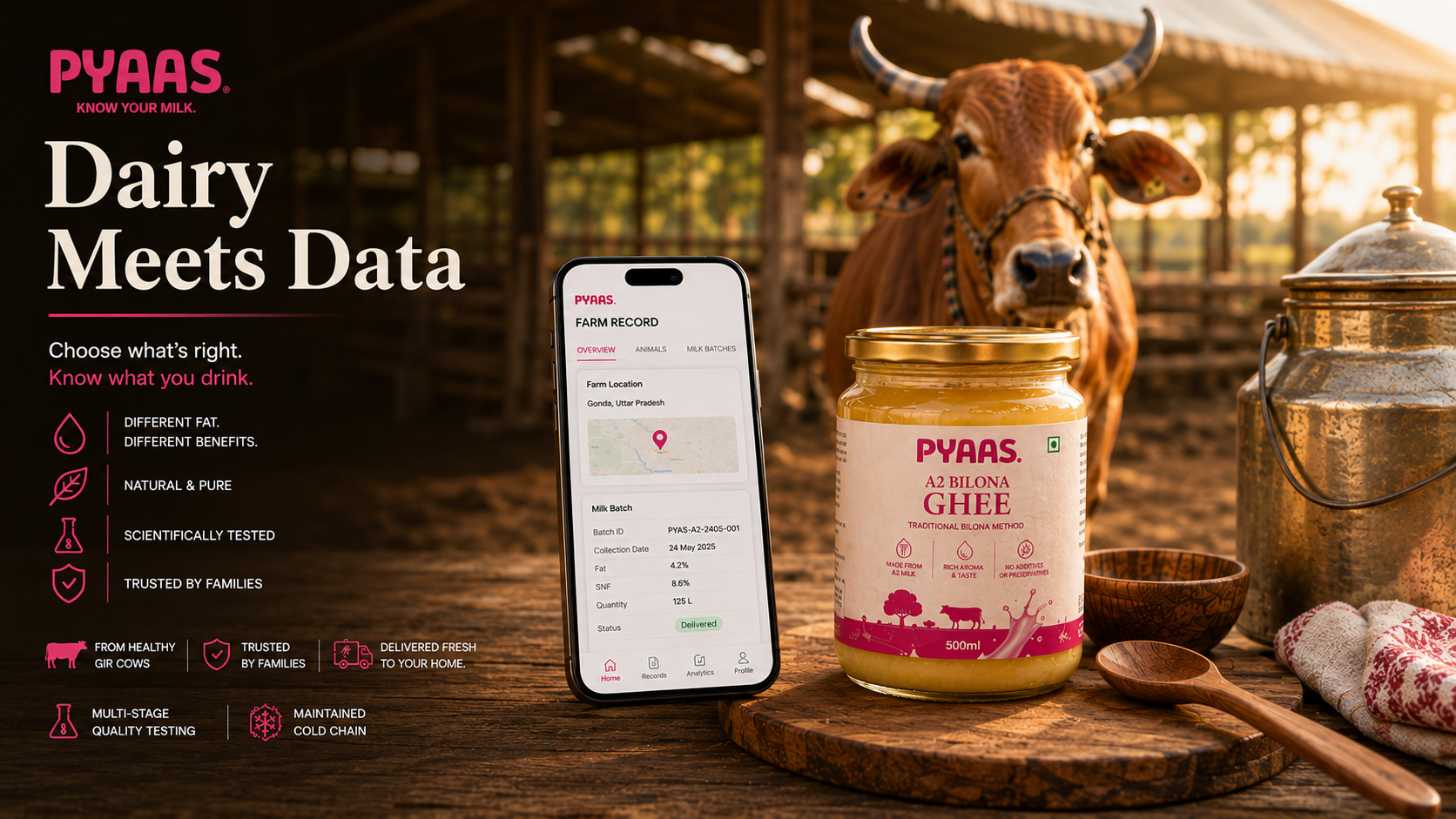
Dairy 4.0: How Technology Is Modernising Indian Dairy
21 August 2026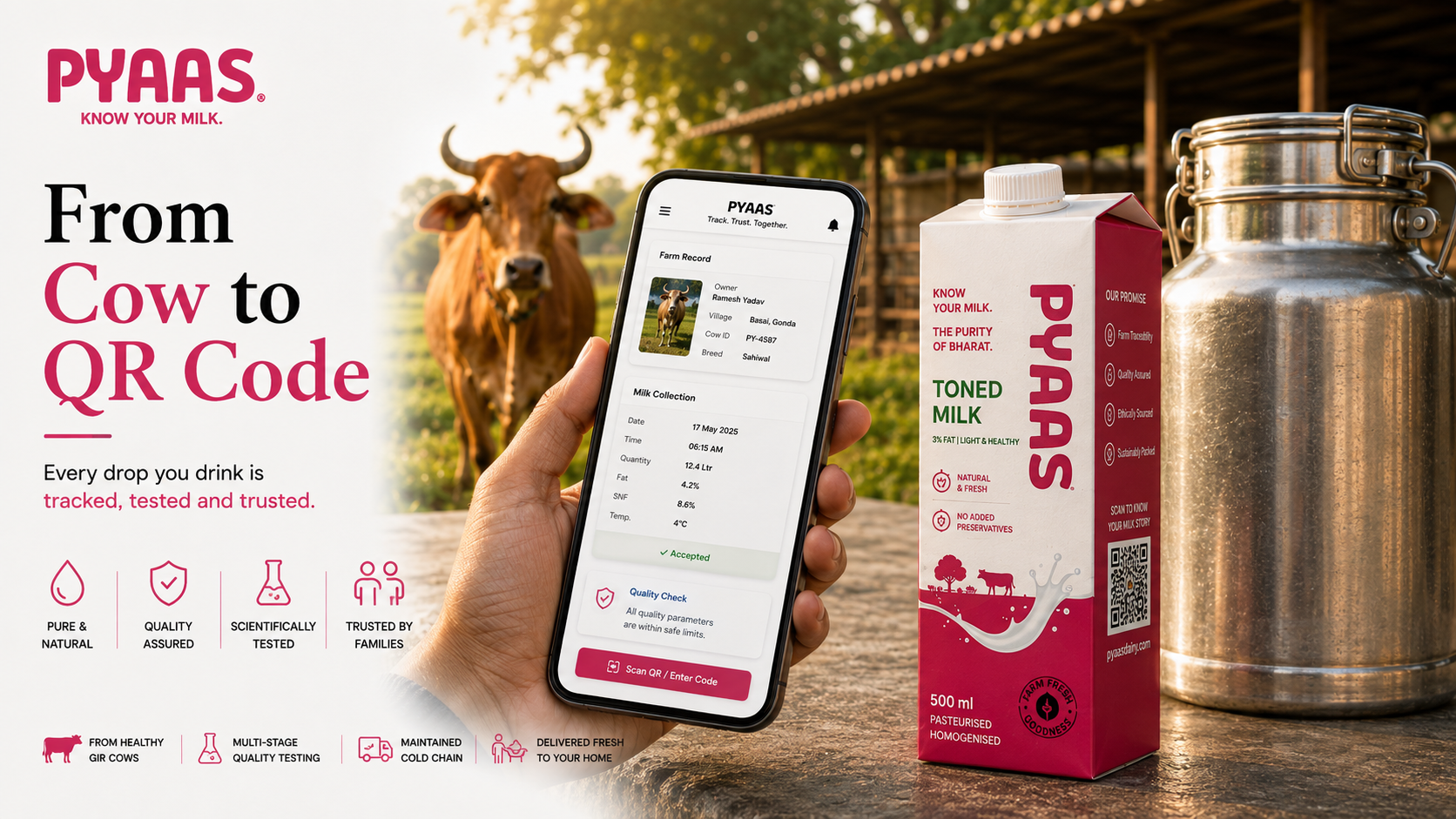
The Technology PYAAS Is Building for Parag: QR Traceability and a Modern Dairy Platform
18 August 2026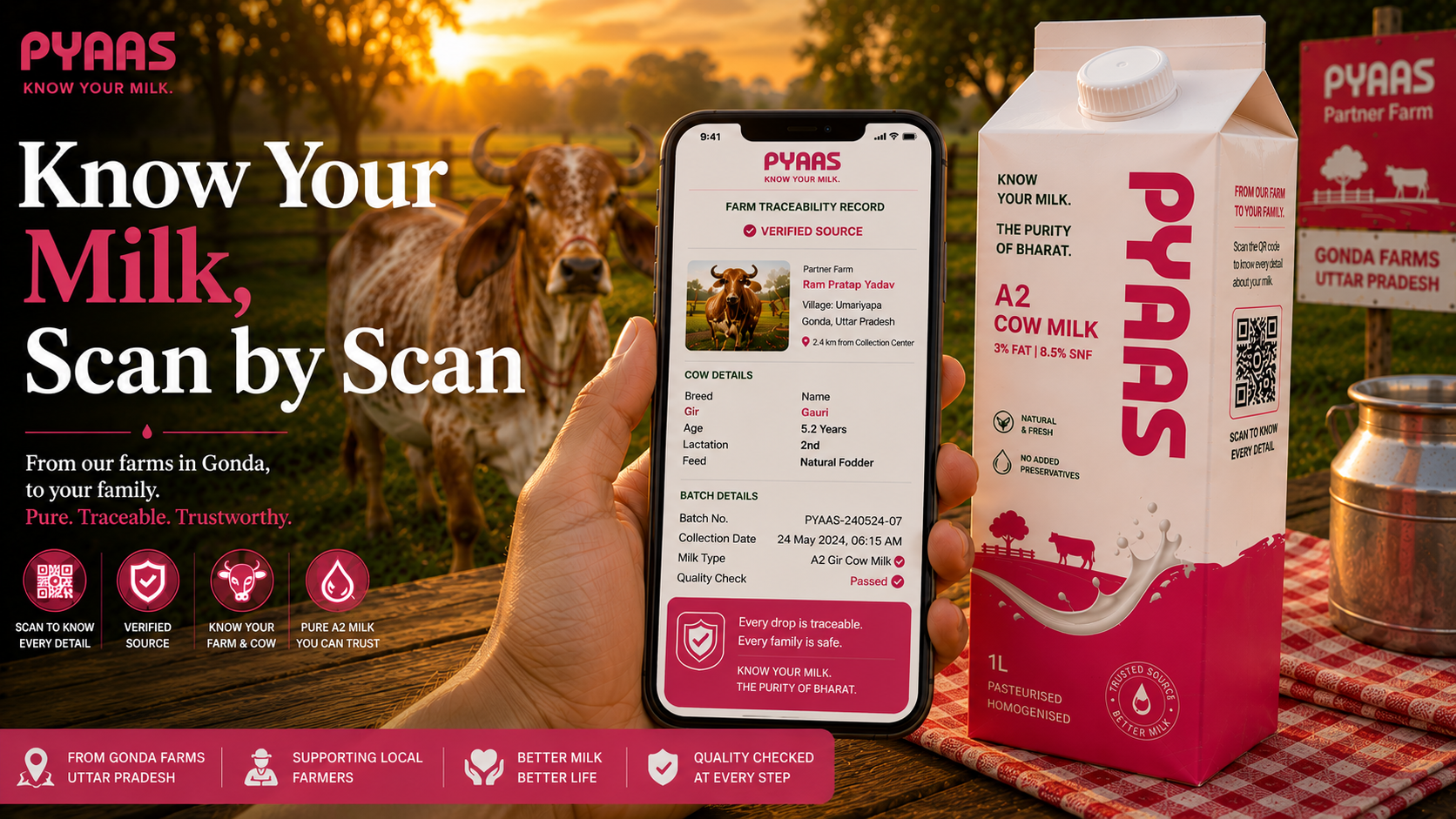
The Technology Behind 'Know Your Milk'
31 July 2026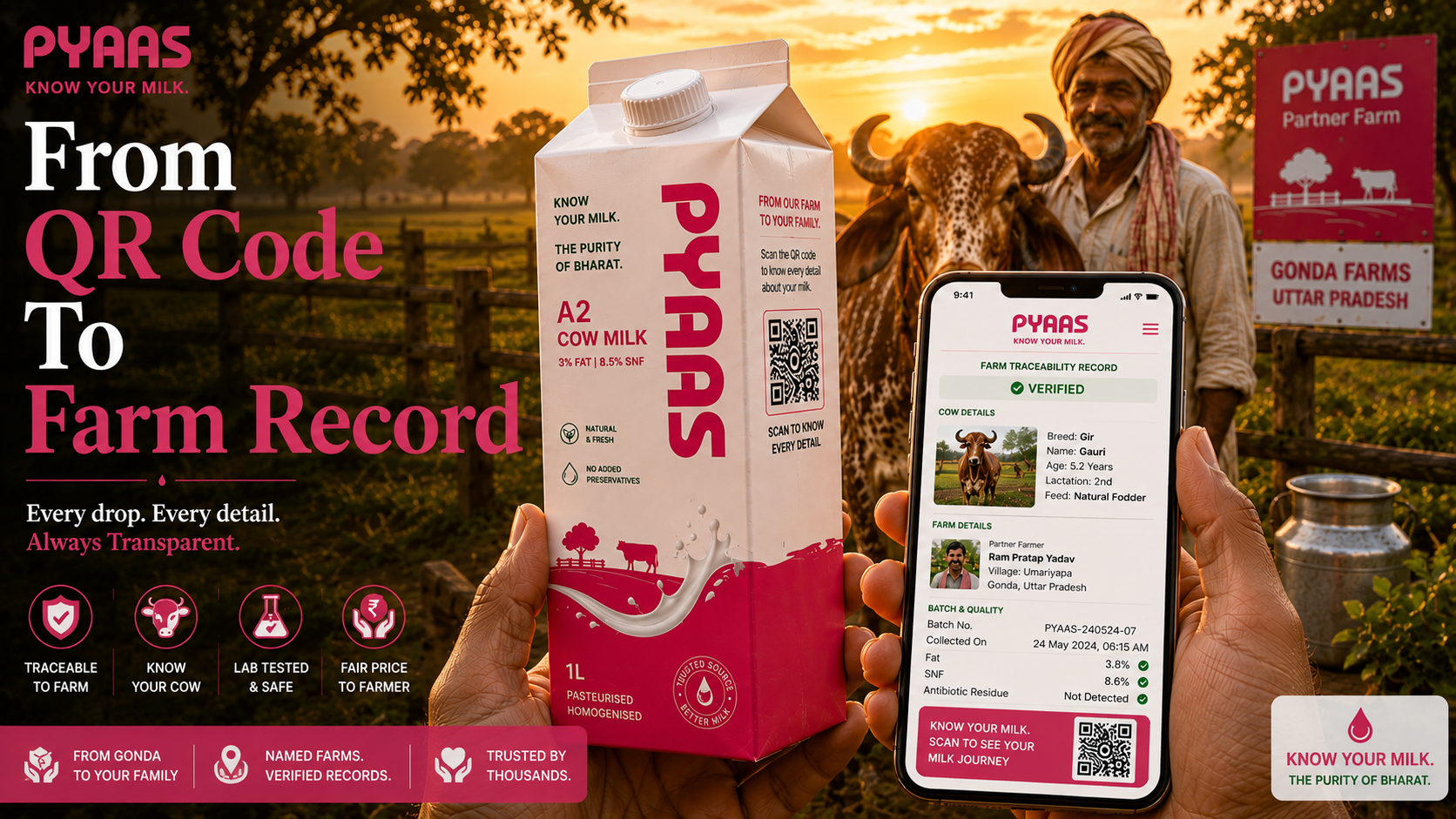
Why a Dairy Brand Needs a CTO: Aryan Sharma on Building PYAAS With Kushagra Kaushik
31 July 2026