Building Dairy Software Farmers Actually Use — Kushagra Shekhar Kaushik
The first version of almost any dairy software fails in the same place: the farm. It looks polished in a demo on a laptop, and then it meets a farmer with one free hand, a phone with a cracked screen and a bar of signal that comes and goes. That gap, between software that looks finished and software that actually gets used at five in the morning in a milking shed, is the problem I spend most of my time on.
I am Kushagra Shekhar Kaushik, Founder and CTO of PYAAS. My job is the product and the technology behind our promise, Know Your Milk: the QR code on every pack, the batch record it opens, and all the plumbing that connects a farm in Gonda to a customer's kitchen. Here are the lessons that shaped how I think about dairy software for farmers, written down honestly, including the parts we are still figuring out.
Most dairy tech is built for the office, not the shed
A lot of dairy technology is really accounting technology wearing a farm costume. It is designed for the person reconciling numbers in an office, not the person actually producing the milk. So it asks for long forms, clean spreadsheets and steady internet, and it quietly assumes the farmer will bend around the software.
On a working farm that assumption breaks immediately. The farmer's attention belongs to the animals and the milk, not to a screen. If our system needs more than a few seconds of that attention, we have already lost. So the first rule at PYAAS is simple: the software adapts to the farm, never the other way around.
Design for a wet hand and a weak signal
When we sit with the farmers we work with, the constraints are physical and unglamorous, and they decide everything:
- One hand is usually busy. Anything that needs two hands and full concentration will not happen during milking.
- The signal is unreliable. Software that only works online is software that fails at exactly the moment it is needed.
- Phones are shared and modest. We build for the phone a farmer already owns, not the one a product manager owns.
- Trust is earned slowly. A screen that hides how a number was reached does not build confidence, it chips away at it.
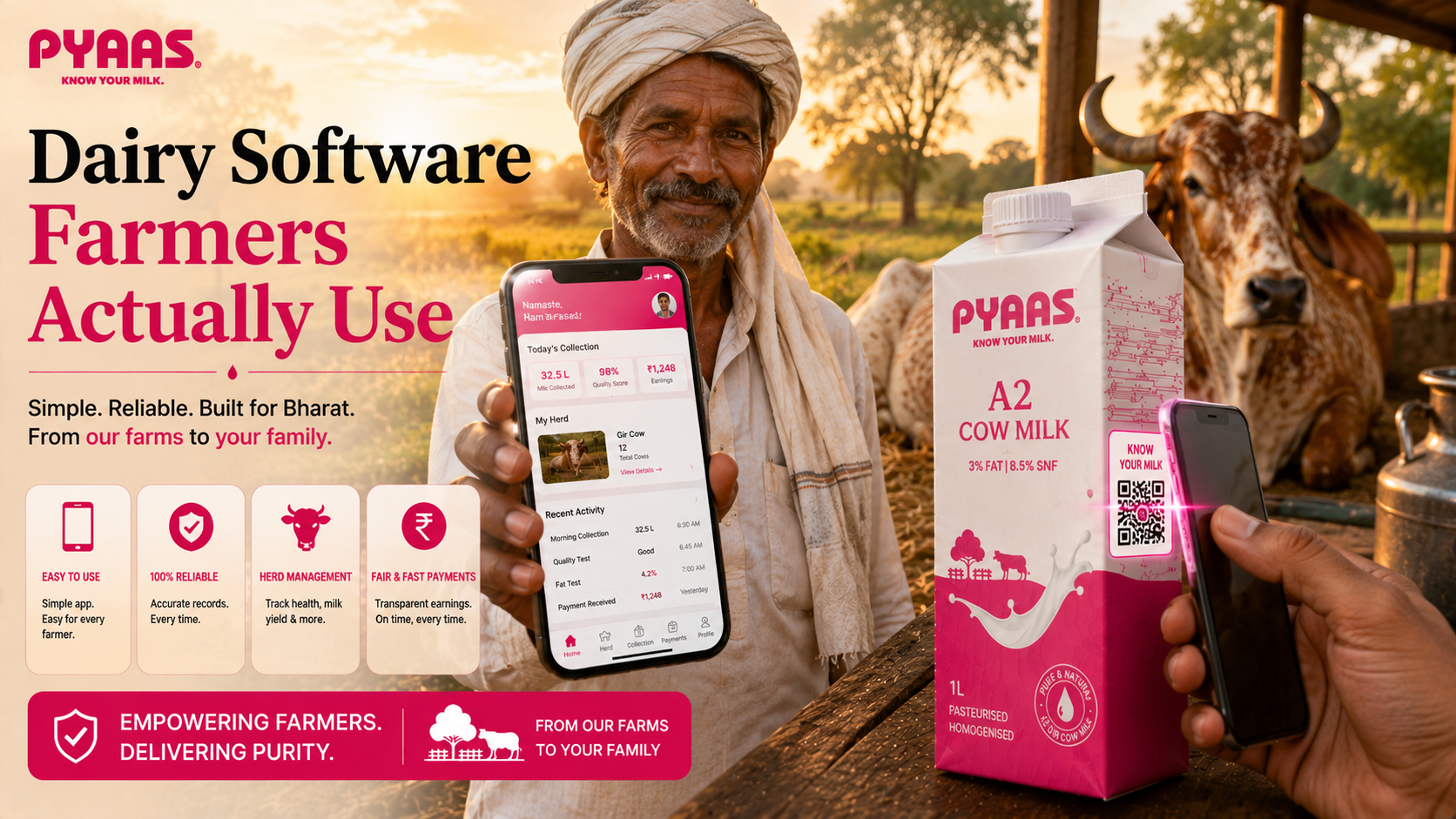
Those constraints push you toward the same answers every time: fewer taps, larger targets, sensible defaults, and a system that records first and syncs later. Capture the reading at the farm, hold it safely on the device, and let it reach our records when the signal returns. The farmer should never have to think about connectivity at all.
The farmer is the first user, not the last
Most supply-chain software treats the farmer as a data source and the customer as the user. We flipped that. At PYAAS the farmer is the first user, because if the person at the start of the chain will not or cannot use the tool, there is no honest data downstream, and the QR code on the pack becomes decoration.
This is where Aryan Sharma, my fellow founder, and I split the work in a way that keeps me honest. Aryan leads the field side, the farms, the collection and the farmer relationships, so I never get to design in a vacuum. Every feature I propose gets tested against a real question: will Ram at Sri Radha Mohan Dairy Farm, or Harsh Singh at Gonard Dairy, or Ranjeet Singh actually use this on a normal morning? If the answer is no, it does not ship, however clever it looks on a slide.
What we actually built
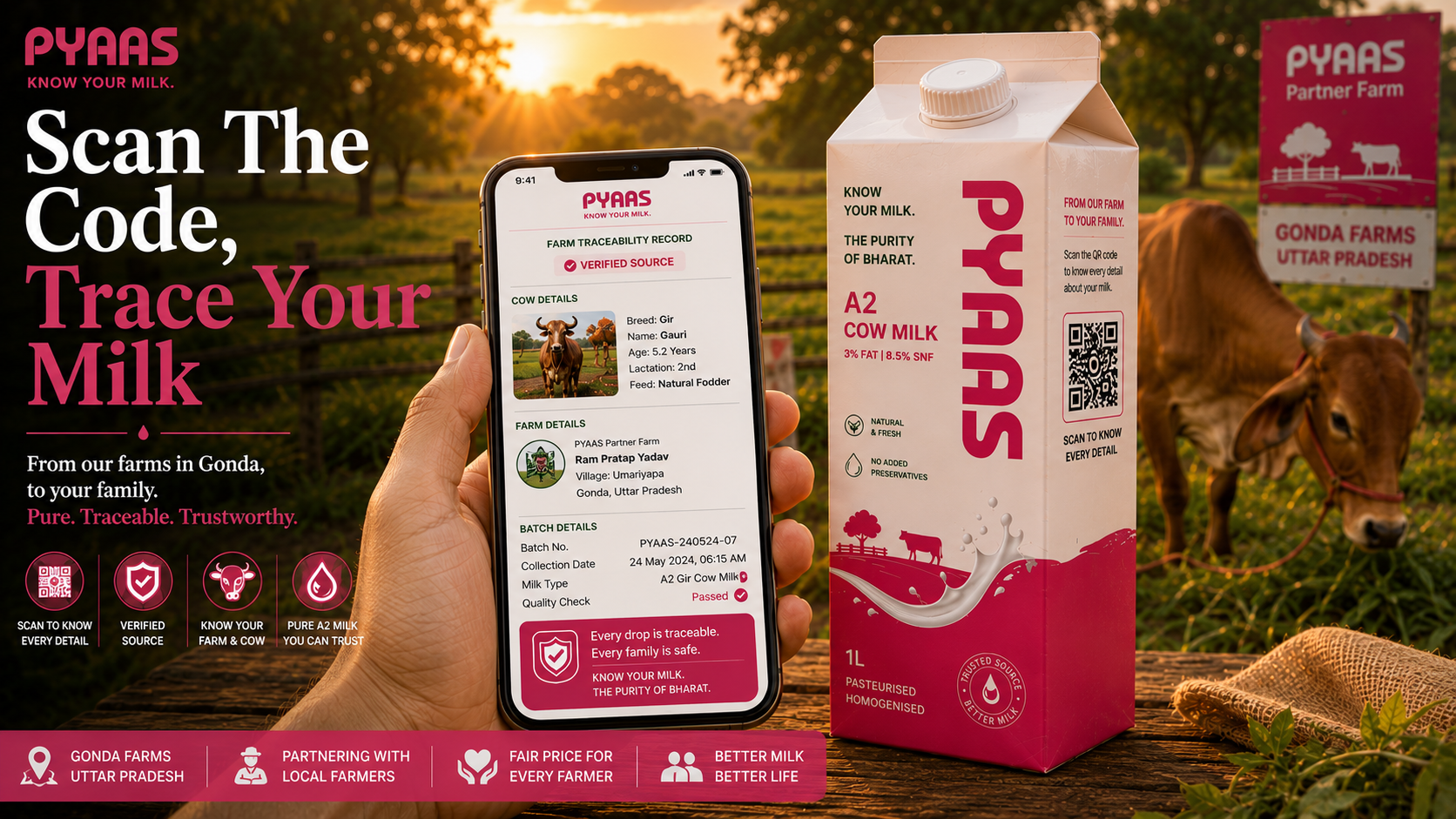
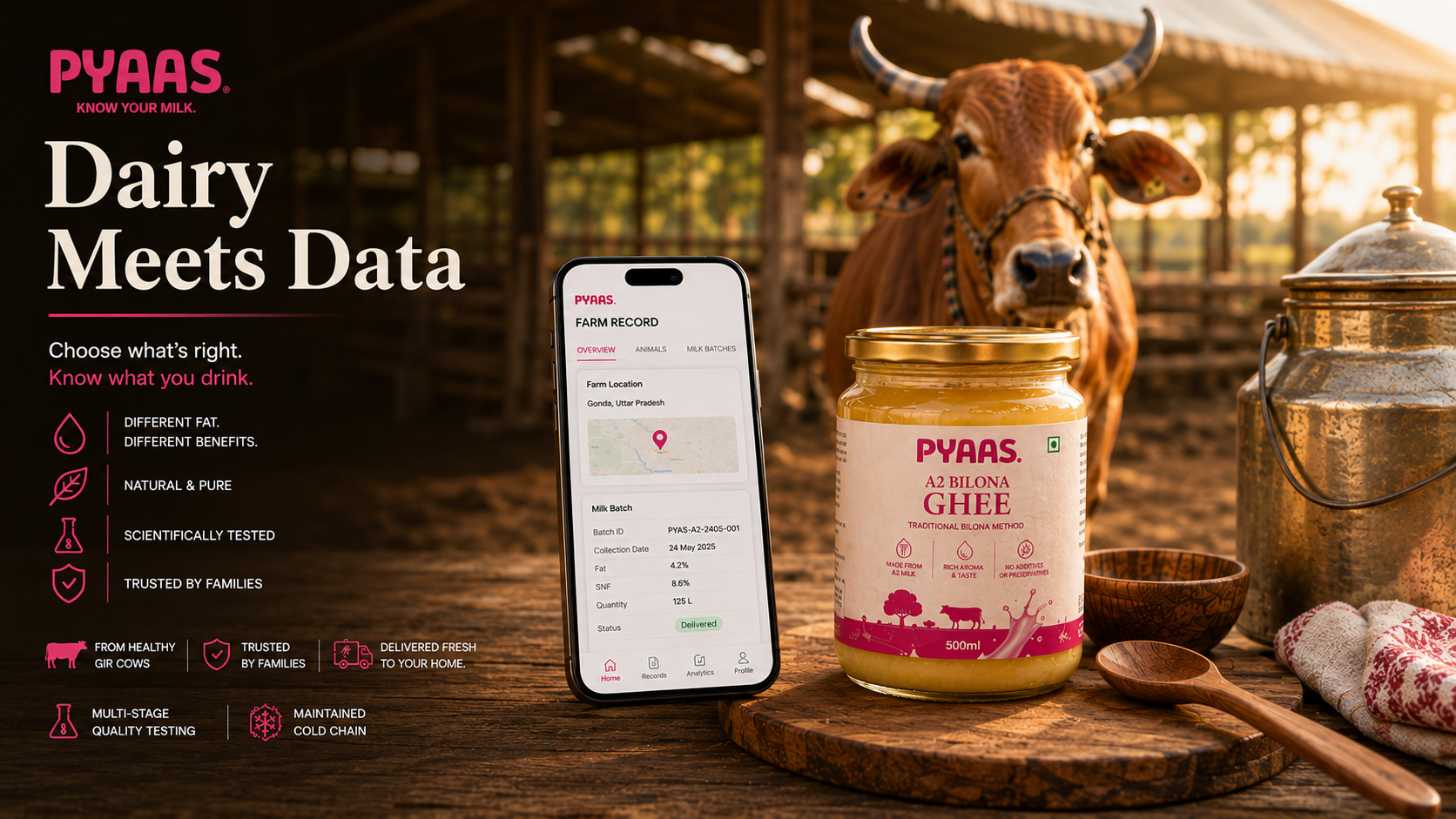
The visible part is small on purpose: a QR code on every pack. Scan it and you can see the farm the milk or ghee came from, the farmer who tends the herd, and that batch's quality record, the checks like SNF and FAT that every batch is quality checked against before it moves. Our herds in Gonda are Holstein Friesian and Sahiwal, and the A2 milk comes from the A2 cows within them.
The invisible part is the discipline behind it. A record is only worth trusting if it was captured at the source, once, by the person who was actually there, and then never quietly edited. So the real job of the technology is not to look impressive. It is to make the honest path the easy path, so that doing the right thing is also the fastest thing to do. When that works, transparency stops being a marketing word and becomes a habit built into the workflow.
Today that system already stands behind our A2 Bilona cow ghee, which ships across India. Our fresh A2 cow milk is still pre-launch: it will launch in Lucknow from August 2026 and expand across Uttar Pradesh from there. I would rather say that plainly than pretend the milk is already at your door.
Where this goes next
The honest truth is that we are early, and good dairy software for farmers is never really finished, because the farm keeps teaching you things a whiteboard never will. My job is to keep shrinking the distance between what a customer sees on a screen and what actually happened in a shed in Gonda that morning.
We are building toward a ₹100 crore dairy brand, but the number I care about most is smaller and closer: the number of seconds it takes a farmer to record a batch. Get that right, and the trust the whole company stands on takes care of itself. That is the work, and it is worth doing carefully. This is Kushagra Shekhar Kaushik from PYAAS, and this is what we mean when we talk about technology that farmers actually use.
Written by
Kushagra Shekhar Kaushik
Kushagra Shekhar Kaushik is the Founder & CTO of PYAAS, an independent, transparency-first dairy brand based in Uttar Pradesh, building the technology that makes every pack traceable to its farm by QR.
More from Kushagra Shekhar KaushikCommon questions.
What makes dairy software actually work for farmers?
It has to fit the farm, not the office. That means it works offline and syncs later, needs only a few seconds and one free hand, runs on the phone a farmer already owns, and records data at the source rather than asking for it afterward. If it needs steady internet or long forms, it will not survive a real milking morning.
Why does PYAAS build its own traceability technology?
Because our whole promise, Know Your Milk, depends on the data being captured honestly at the farm. Most off-the-shelf tools are built for accounting, not for a farmer with wet hands and a weak signal. Building our own lets us make the honest path the easy path, so the QR code on the pack reflects what actually happened.
What can I see when I scan the QR code on a PYAAS pack?
You can see the farm the milk or ghee came from, the farmer who tends the herd, and that batch's quality record, including checks like SNF and FAT. Our A2 Bilona ghee ships across India today, and fresh A2 cow milk will launch in Lucknow from August 2026.
Get the next one in your inbox.
The occasional note on milk, ghee, and how we work. Plain words, no hype, and you can leave any time.
Keep reading.
Dairy 4.0: How Technology Is Modernising Indian Dairy
21 August 2026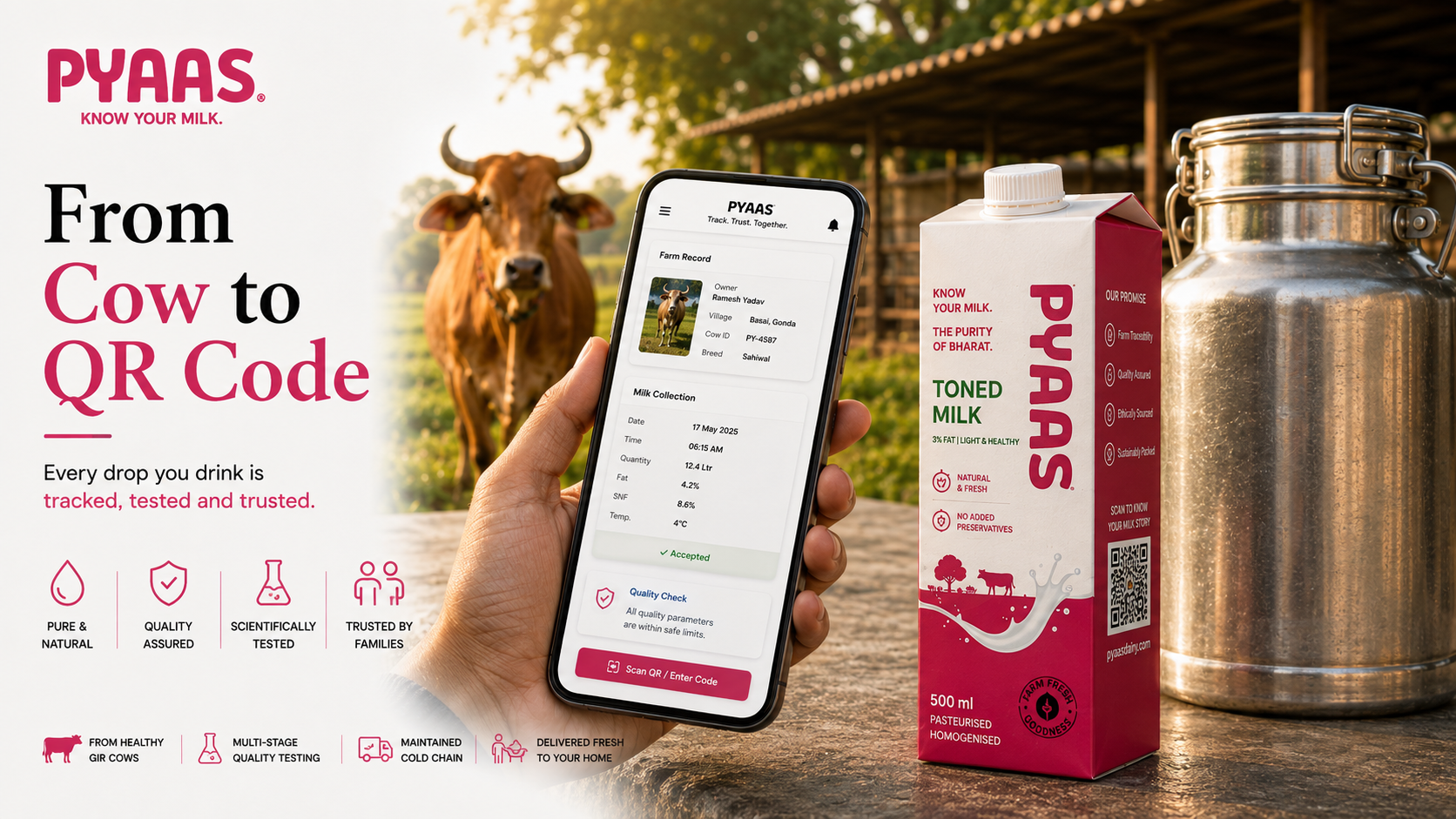
The Technology PYAAS Is Building for Parag: QR Traceability and a Modern Dairy Platform
18 August 2026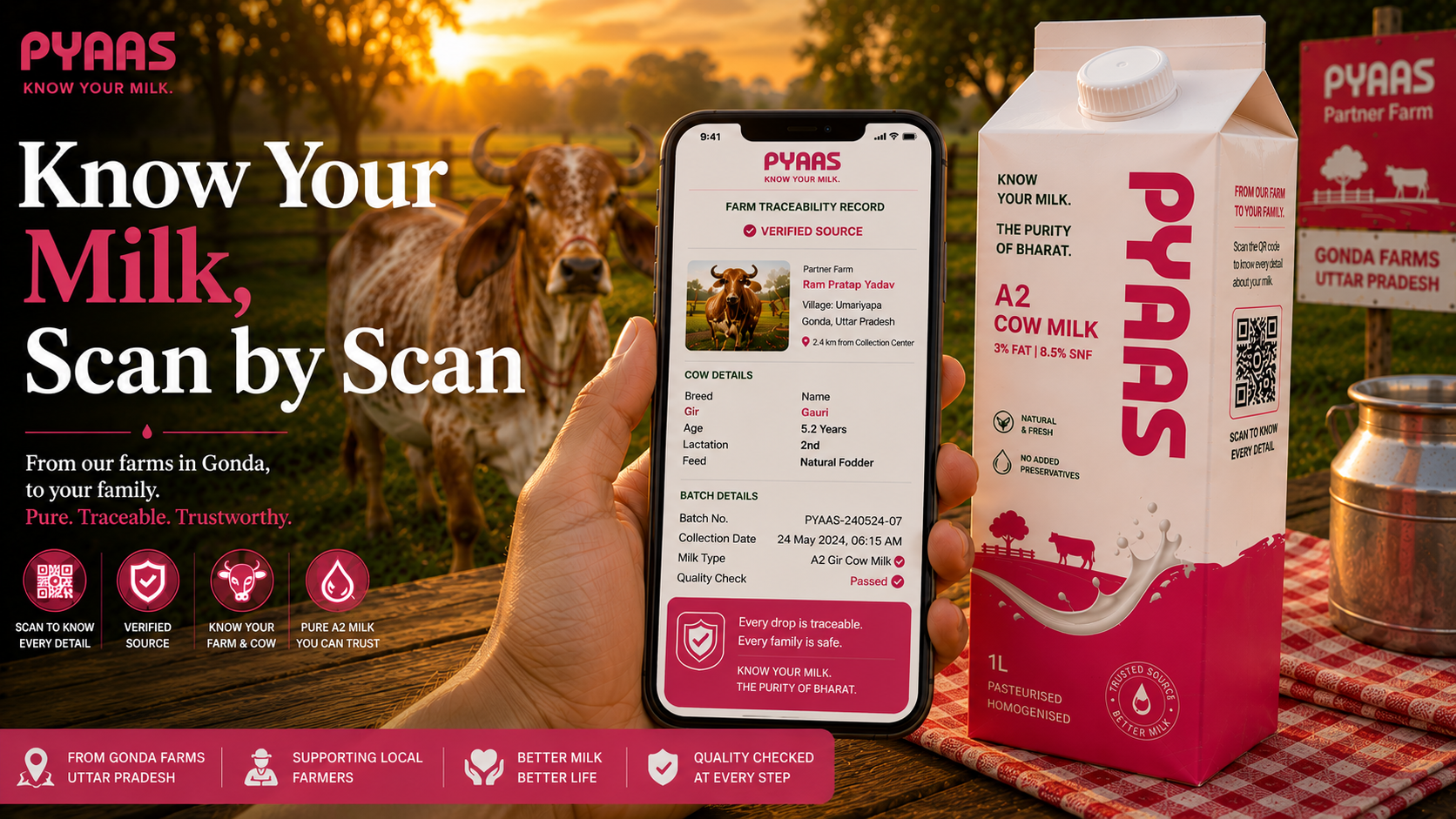
The Technology Behind 'Know Your Milk'
31 July 2026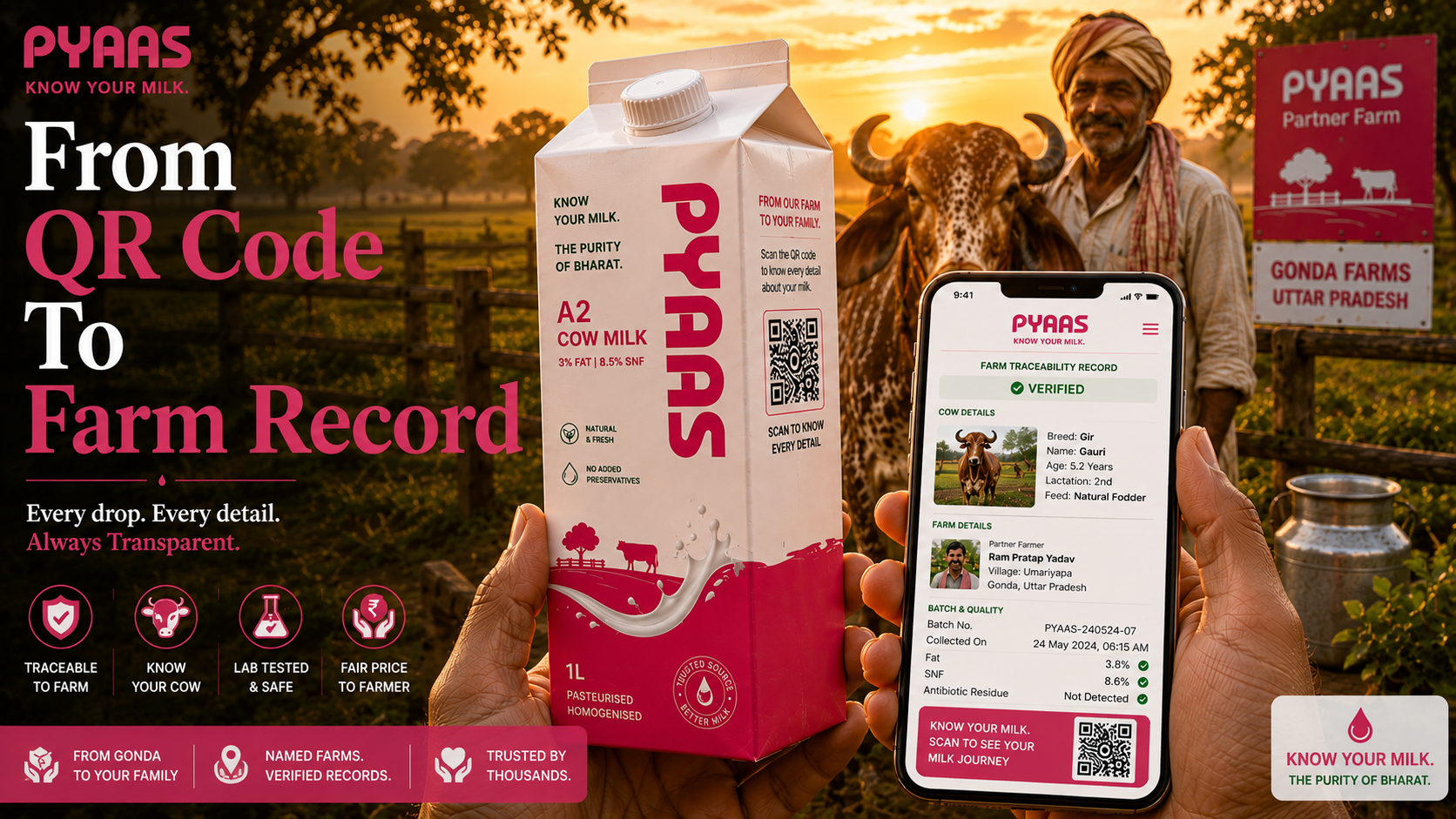
Why a Dairy Brand Needs a CTO: Aryan Sharma on Building PYAAS With Kushagra Kaushik
31 July 2026