How We Connect a Pack to a Farmer and a Batch
The first thing I built for PYAAS was not an app screen. It was a rule: no pack of ghee and, soon, no carton of milk leaves us unless we can name the farmer, the farm and the exact batch it came from. Everything else in our technology exists to keep that rule true. I am Kushagra Shekhar Kaushik, Founder and CTO of PYAAS, and I want to answer a very specific question here — how do we actually connect a milk pack to a farmer and a batch, not as a slogan on the label, but as data you can check.
Start with the pack, not the database
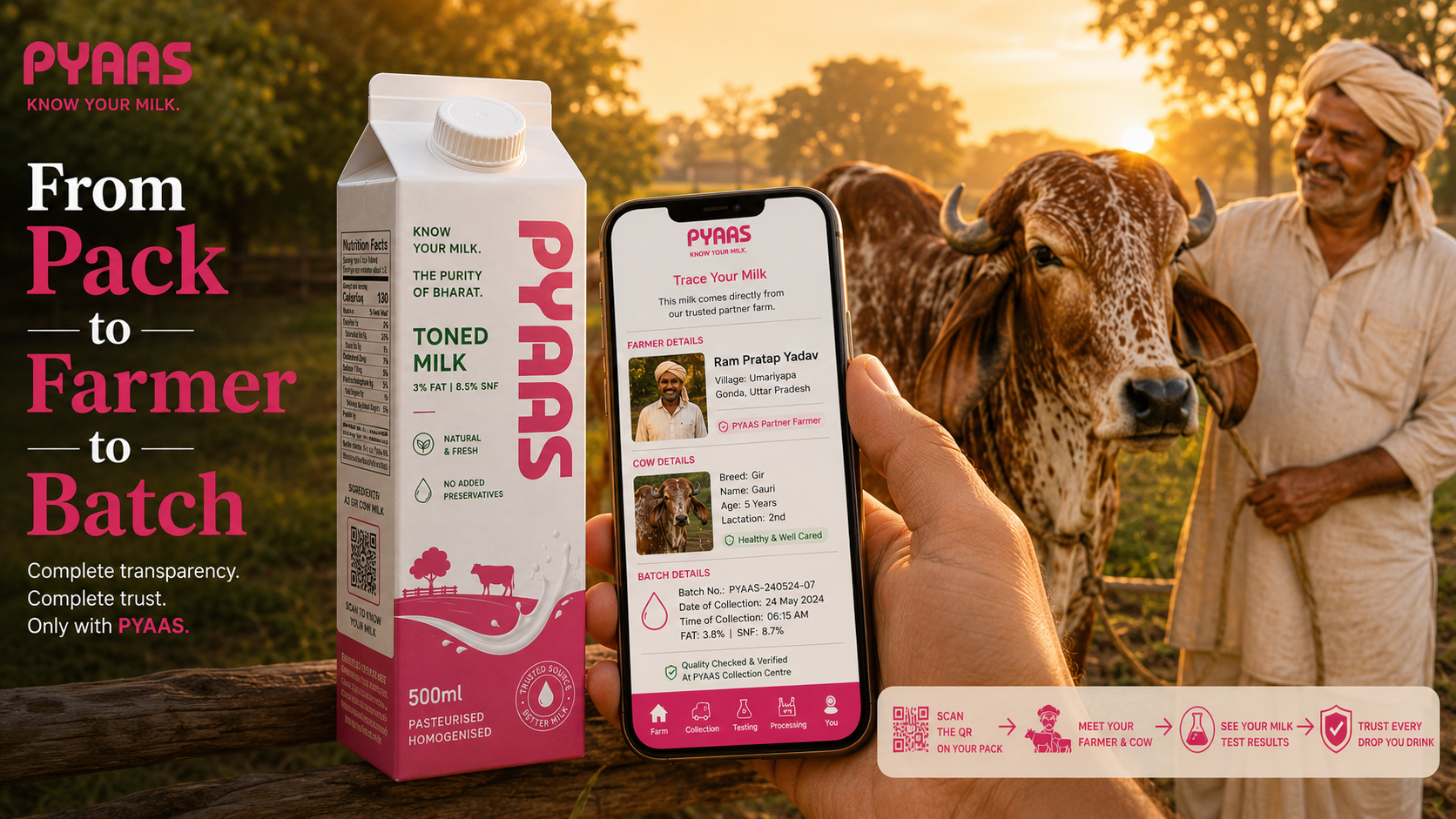
Most traceability projects fail because they begin inside a warehouse system and try to bolt a story on top of it. We started from the object in your hand. When you scan the QR code on a PYAAS pack, the code itself carries almost nothing — just a unique identifier. That identifier is deliberately dumb. It does not encode a price, a date, or a farm name that could be edited, faked or reused. It is a key, and the key opens exactly one record.
Keeping the code empty is a trust decision as much as a technical one. If the QR held the data, the data could be rewritten to say anything after the fact. Because it only holds a pointer, the answer you see is the answer we committed to at the moment that batch was made. You are not reading marketing; you are reading a record we can no longer quietly change.
The three things every pack must resolve to
Behind that identifier, the model resolves to three linked things, and only three of them matter:
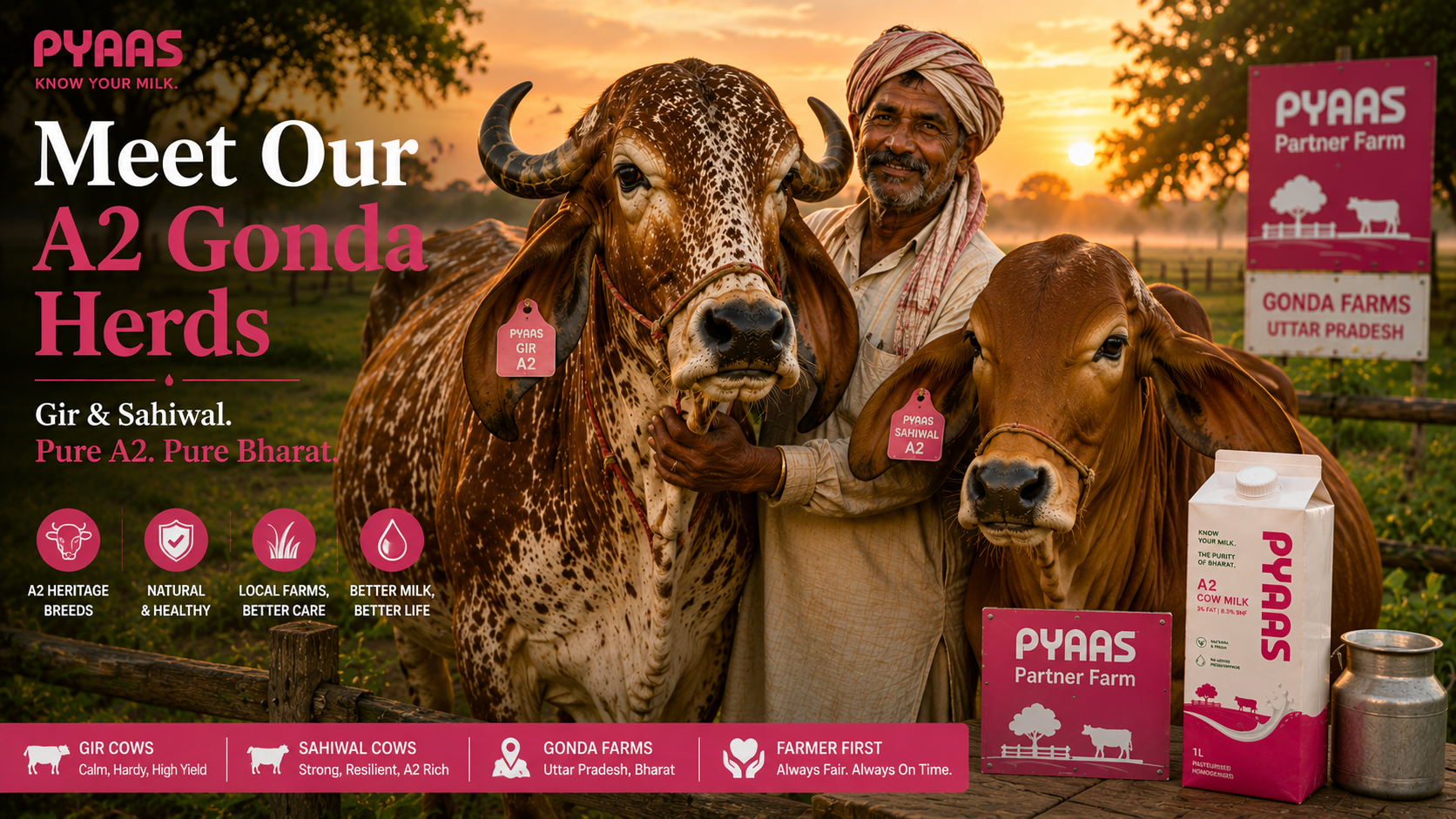
- A farmer — a named, real person. Ram at Sri Radha Mohan Dairy Farm, Harsh Singh at Gonard Dairy, or Ranjeet Singh at Ranjeet Singh Dairy Farm, all in Gonda, Uttar Pradesh.
- A farm — the specific place and herd, like Sri Radha Mohan Dairy Farm and its 76 cows, a mix of Holstein Friesian and Sahiwal, with the A2 milk coming from the A2 cows in that herd.
- A batch — the single collection run that your pack belongs to, carrying its own quality-checked record.
How the links actually hold
In the data model, a farmer is one record and a farm is another. Each collection creates a new batch record that references both of them. A pack is never a free-floating product — it is stamped with its batch at fill time. So the pack points to the batch, the batch points to the farm and the farmer, and the chain only ever runs in one direction. When you scan, we simply walk that chain and show you what it says.
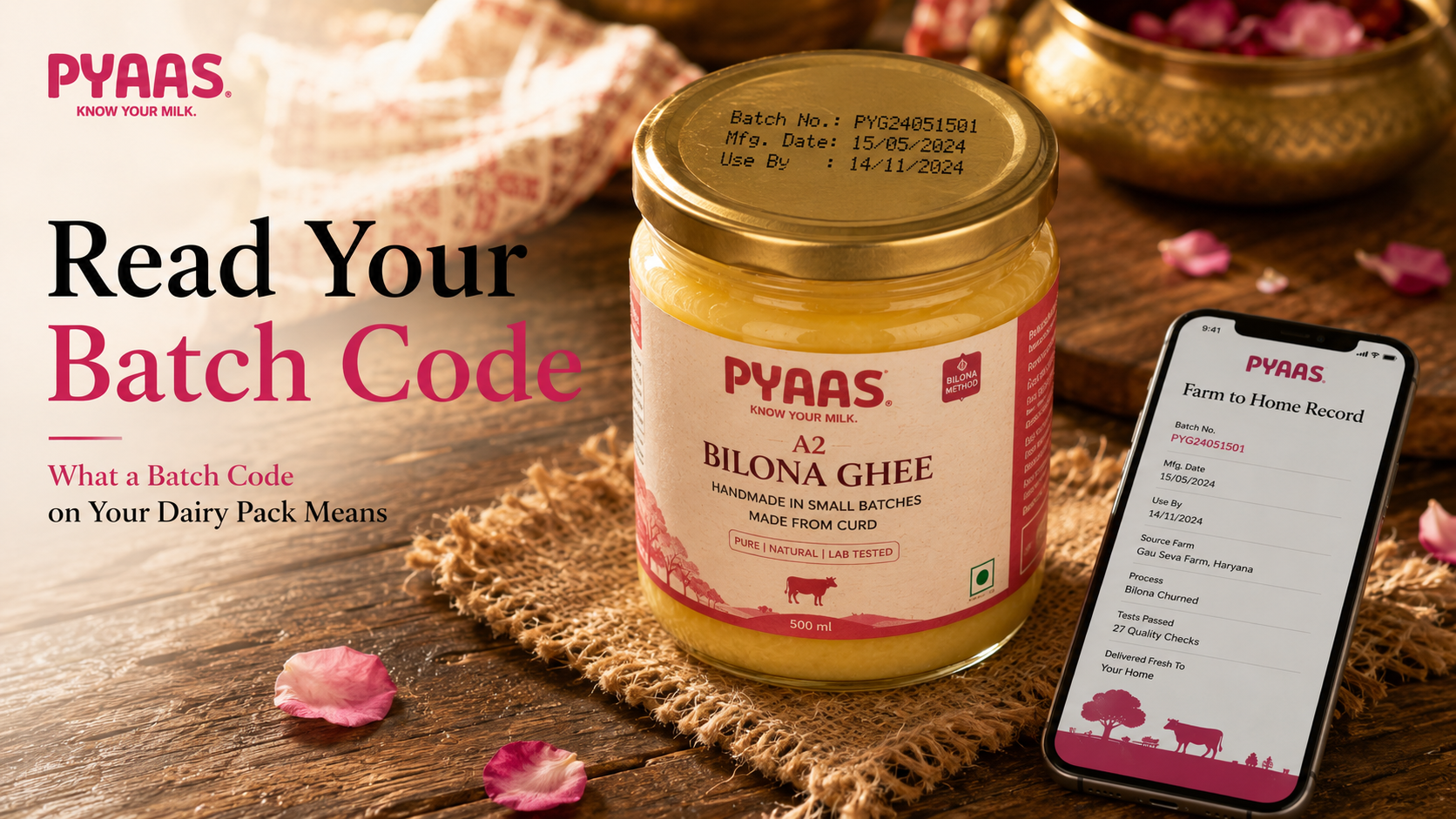
The batch record is where the honesty lives. It holds when the milk was collected, which farm and farmer it came from, and that batch's quality-checked readings — not a generic number reprinted on every pack, but the reading for the milk you are actually about to use. If a batch does not have a complete record, it does not get a code, and without a code it does not ship. We designed it so that the honest path is the only path a pack can take.
Why single-origin is what makes this possible
This is also why PYAAS refuses to pool milk from thousands of anonymous farms. Once milk from many sources is mixed in a tanker, the link to any one farmer is gone forever. You can still print a warm story on the carton, but you can no longer connect that pack to a person. By keeping milk single-origin from named farms in Gonda, we keep each batch small enough that every pack can still point back to one farmer and one collection. The technology does not create the transparency — the sourcing decision does. The code just lets you verify it.
What comes next
Right now this system runs live on every jar of our A2 Bilona ghee, which ships across India today. The harder test comes next: fresh A2 cow milk launches in Lucknow from August 2026 and expands across Uttar Pradesh, and milk moves fast and spoils, so every batch record has to be opened and closed within hours, not days. That is the problem my team and I are building for now. When you scan a PYAAS pack, I want the answer to feel almost boring in its certainty — this farmer, this farm, this batch — because Know Your Milk is not a tagline we wrote. It is a promise the data has to keep. — Kushagra Shekhar Kaushik
Written by
Kushagra Shekhar Kaushik
Kushagra Shekhar Kaushik is the Founder & CTO of PYAAS, an independent, transparency-first dairy brand based in Gonda and Lucknow, Uttar Pradesh, building the technology that makes every pack traceable to its farm by QR.
More from Kushagra Shekhar KaushikCommon questions.
How does PYAAS connect a milk pack to a farmer?
Every PYAAS pack carries a unique QR code that works as a key rather than a label. When you scan it, the code opens one batch record, and that record is linked to the named farmer and the farm the milk came from. So the pack points to the batch, and the batch points to the person and place behind it.
What information is in a PYAAS batch record?
A batch record holds when the milk was collected, which farm and farmer it came from, and that batch's quality-checked readings. Those are the numbers for that specific run of milk, not a generic brochure figure printed on every pack.
Why does single-origin sourcing matter for traceability?
Once milk from many farms is pooled together in a tanker, the link to any one farmer is lost for good. PYAAS keeps milk single-origin from named farms in Gonda, Uttar Pradesh, so every pack can still be traced back to one farmer and one collection.
Get the next one in your inbox.
The occasional note on milk, ghee, and how we work. Plain words, no hype, and you can leave any time.
Keep reading.
What a Batch Code on Your Dairy Pack Means
2 September 2026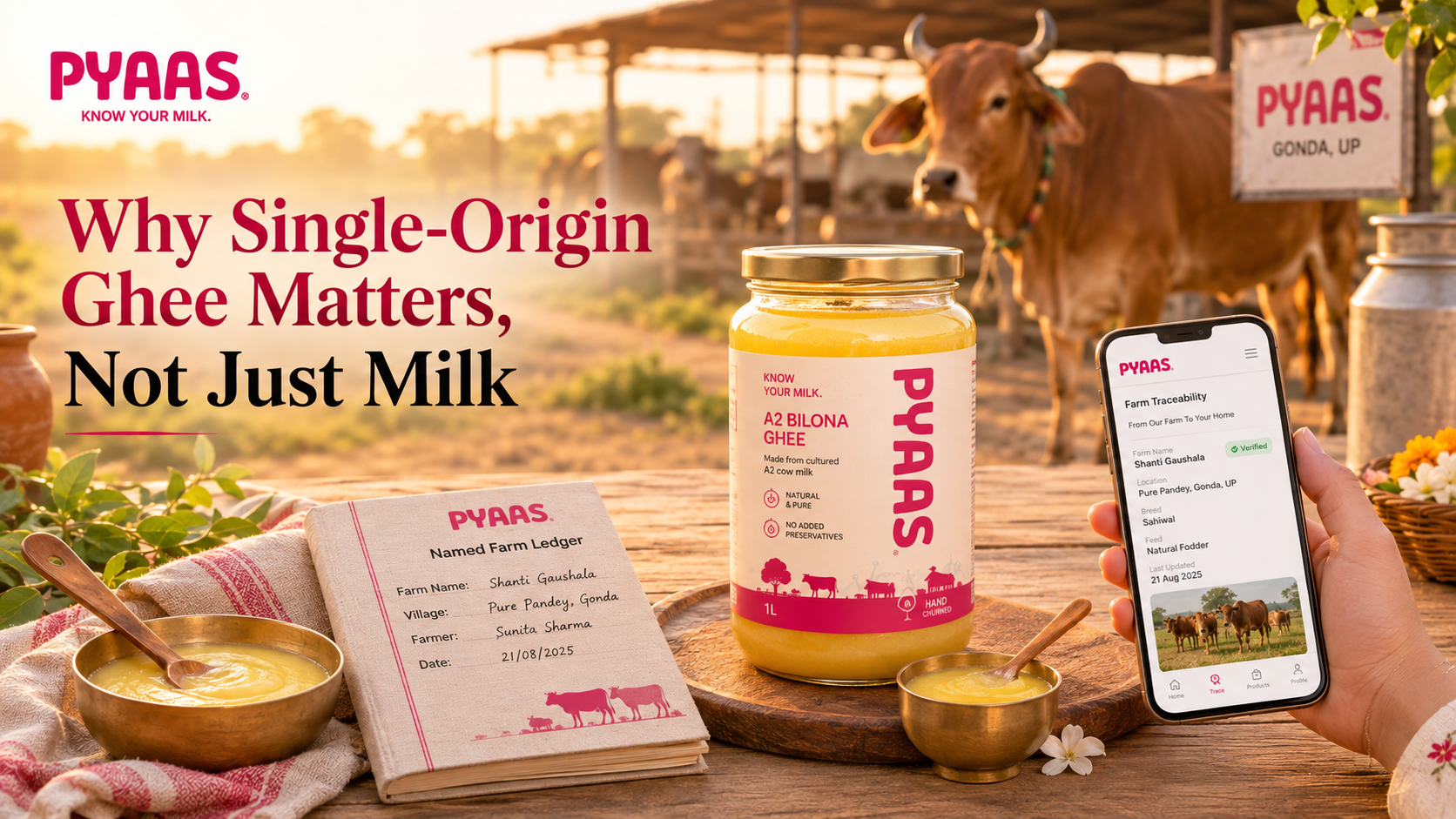
Why Single-Origin Ghee Matters, Not Just Milk
23 August 2026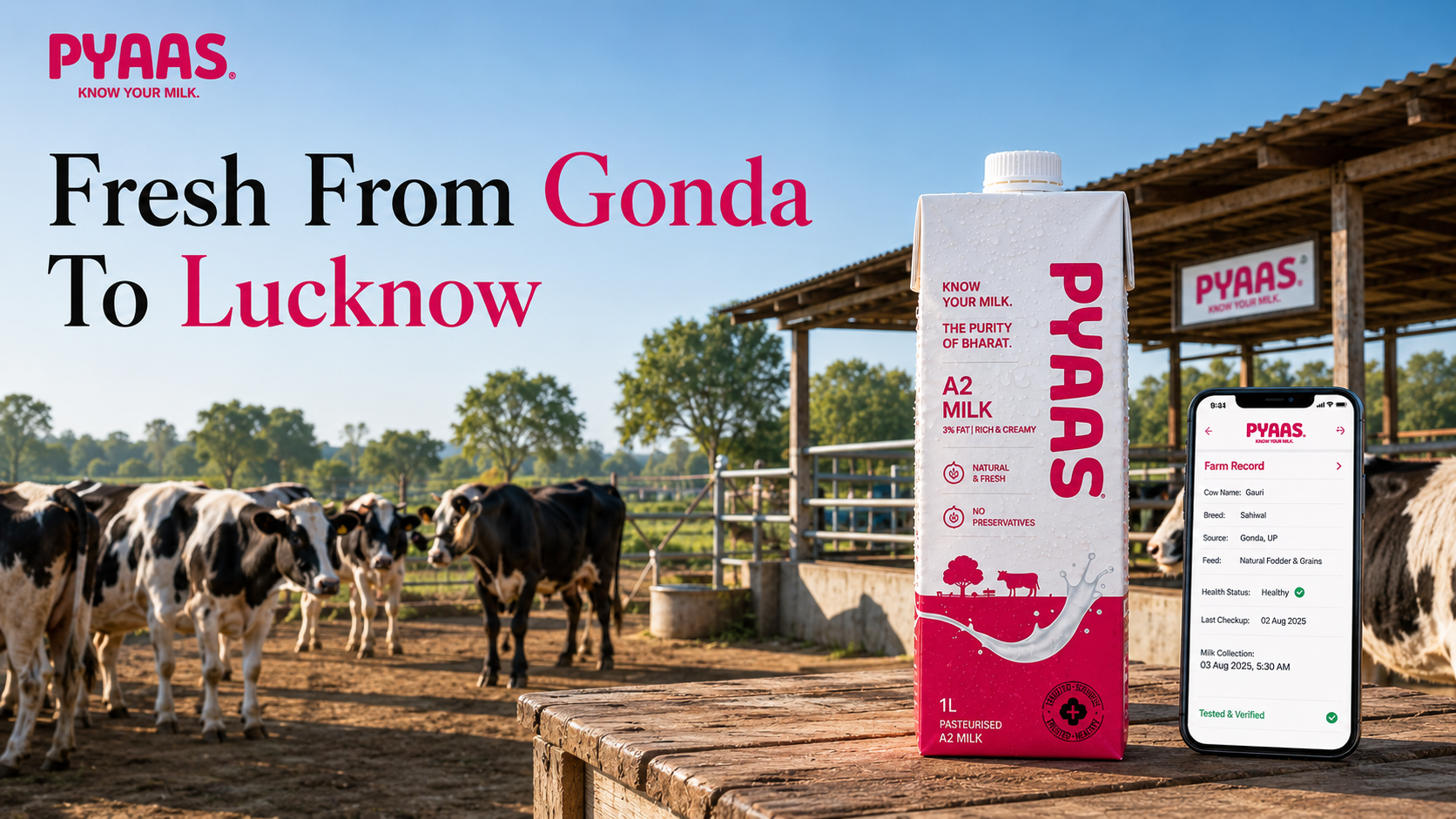
How PYAAS Keeps Milk Fresh From Gonda to Lucknow
21 August 2026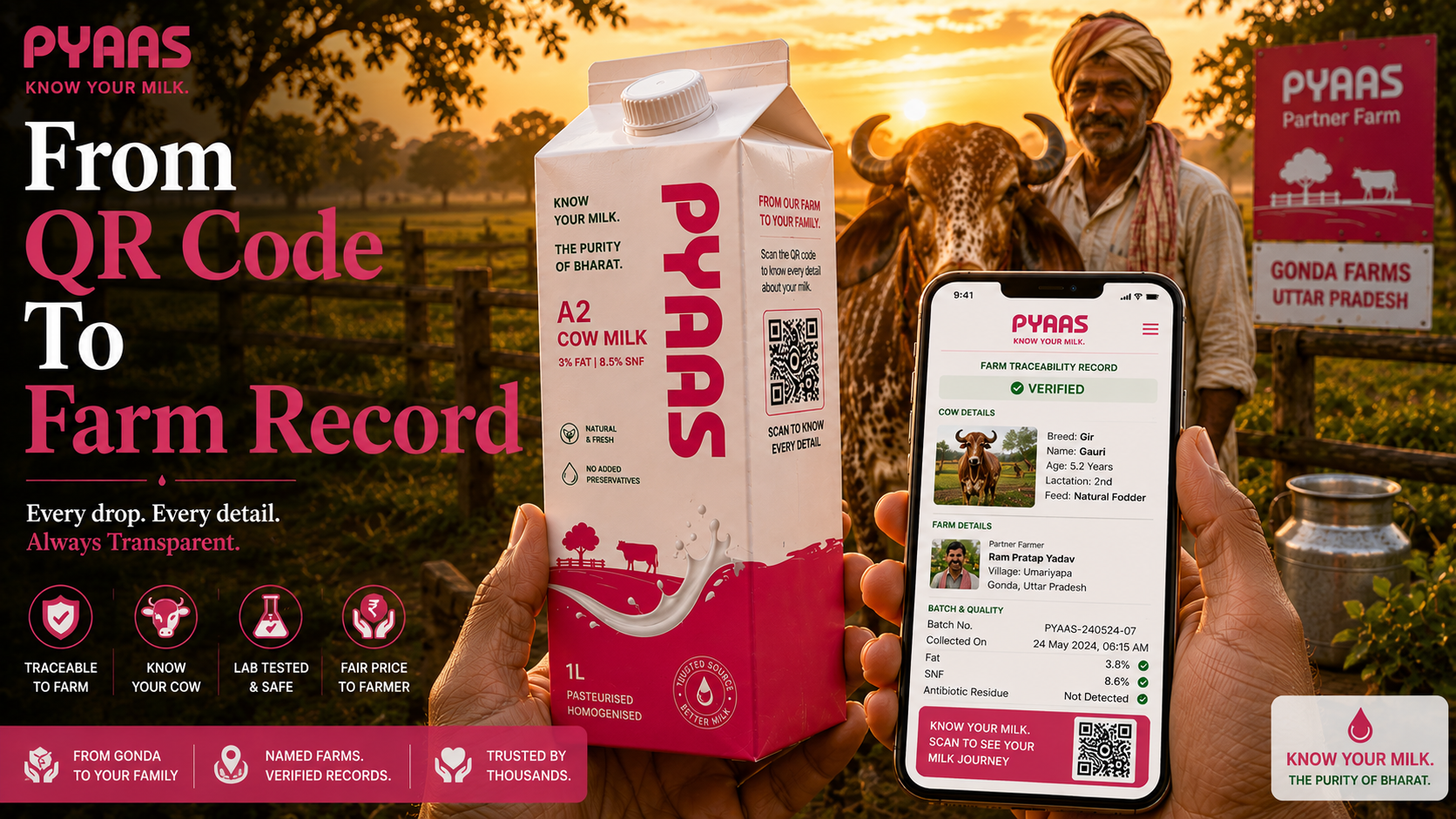
From QR Code to Farm Record: The Full Trace
28 July 2026