What Is BCM-7 and Why It Matters in A2 Milk
Somewhere in the small print of nearly every A2 milk explainer sits a curious little code: BCM-7. It sounds technical, even a bit intimidating, but the idea behind it is simple, and understanding it helps you see A2 milk for what it honestly is, without the exaggeration. So let us answer the question directly: what is BCM-7, and why does it come up whenever people talk about A2 milk?
BCM-7 in plain language
BCM-7 stands for beta-casomorphin-7. It is a peptide, which just means a short chain of amino acids, that can be produced when a particular milk protein is digested. That protein is beta-casein, one of the main proteins in cow milk. When your gut breaks beta-casein down, the way it fragments depends on which form of the protein you drank.
The A1 connection
Beta-casein comes in two common genetic forms, A1 and A2, and they differ by a single amino acid. When the A1 form is digested, that structural difference can allow BCM-7 to be released as a fragment. When the A2 form is digested, the chain holds together differently at that spot, so BCM-7 is not released in the same way. In short, BCM-7 is associated with A1 milk, and A2 milk is defined partly by avoiding it. If you want the deeper protein story, our article on A1 versus A2 milk lays out that single amino acid difference.
Why people care about BCM-7
The reason BCM-7 gets attention is that some researchers have investigated whether it plays a role in the digestive discomfort that certain people feel after ordinary milk. The thinking is that if A1 milk releases BCM-7 and A2 does not, then people who feel lighter on A2 milk might be reacting to that difference. It is a plausible and interesting line of research, and it explains why so many families say A2 simply sits better with them.
But here honesty has to lead. The science around BCM-7 is still settling. Studies vary in quality and findings, and there is no consensus that BCM-7 causes harm in healthy people. Countless people drink A1-containing milk their whole lives without any trouble. So BCM-7 is best described as a genuine area of ongoing study, not a proven danger and certainly not a reason for fear.
- What BCM-7 is: a peptide released when A1 beta-casein is digested.
- Why A2 comes up: A2 milk does not release BCM-7 the same way.
- What the science says: the link to discomfort is studied but not settled.
- What it is not: a proven toxin, and not a reason to fear milk.
What BCM-7 does not mean
It is worth being blunt about the claims BCM-7 cannot support. Avoiding BCM-7 does not cure lactose intolerance, because lactose is a sugar and BCM-7 is about protein, two entirely separate things. A2 milk does not treat, cure or prevent any disease. And feeling gentler for some people is not the same as being medically superior for everyone. If someone sells you A2 milk as a health treatment built on BCM-7, they have gone well past what the evidence allows.
The reasonable, honest position is this: many people find A2 milk easier to digest, part of the explanation may involve BCM-7, and the full picture is still being worked out by scientists. That is enough of a reason to offer A2 milk without needing to overpromise.
How PYAAS approaches it
At PYAAS we would rather tell you the truth than sell you a slogan. Whether a cow produces A1 or A2 beta-casein is a per-animal genetic trait, so we identify the A2 cows within our partner herds in Gonda cow by cow and keep their milk separate. We never claim a whole herd or breed is all A2, and we never claim BCM-7 avoidance does anything it does not. This is what Know Your Milk means in practice: real facts, verifiable at the source.
Every pack carries a QR code you scan to see the exact farm, farmer and batch record, so the A2 claim behind the BCM-7 story is something you can actually check. Fresh A2 cow milk launches in Lucknow from August 2026 and will expand across Uttar Pradesh, while our A2 Bilona ghee ships across India today.
The honest bottom line
So, BCM-7 is a peptide released when A1 milk is digested, and A2 milk is defined partly by not releasing it. Many people find A2 gentler, some of the reason may involve BCM-7, and the science is still catching up. There is no cause for fear and no cure to promise. What PYAAS offers instead is A2 milk from genuinely identified A2 cows, with the whole claim laid open for you to verify.
Written by
Naina Sharma
PYAAS is an honest, traceable Indian dairy brand from Gonda, Uttar Pradesh.
More from Naina SharmaCommon questions.
What is BCM-7 in milk?
BCM-7, short for beta-casomorphin-7, is a small peptide that can be released when the A1 form of beta-casein is broken down during digestion. Milk that is purely A2 does not release BCM-7 in the same way. It is the peptide most often mentioned in explanations of why A2 milk may feel gentler.
Is BCM-7 dangerous?
There is no basis for alarm. Researchers have studied whether BCM-7 relates to digestive comfort in sensitive people, but the evidence is still developing and far from settled. Millions of people drink A1-containing milk without issue, so BCM-7 is best understood as an area of ongoing study, not a proven hazard.
Does avoiding BCM-7 mean A2 milk cures digestive problems?
No. A2 milk simply avoids releasing BCM-7 during digestion, which some people find gentler, but it is not a cure for any condition. A2 also does nothing about lactose, the milk sugar. If you have persistent digestive issues, the right step is to see a doctor.
Get the next one in your inbox.
The occasional note on milk, ghee, and how we work. Plain words, no hype, and you can leave any time.
Keep reading.
Tharparkar Cow Milk: One of India's Hardy A2 Breeds
19 August 2026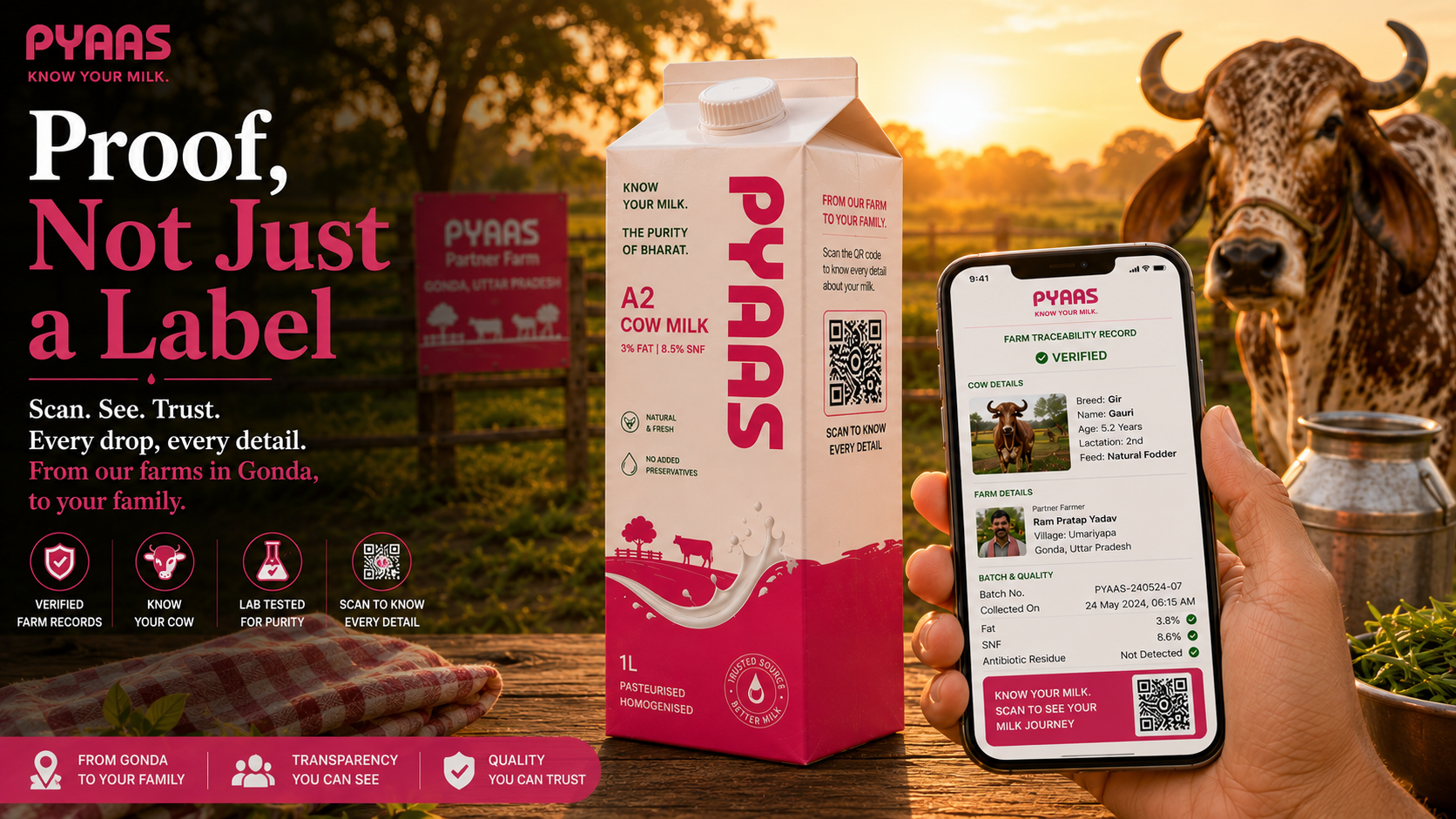
Why an A2 Claim Needs Proof, Not Just a Label
28 July 2026
The A2 Cows in Our Gonda Herds, Explained
26 July 2026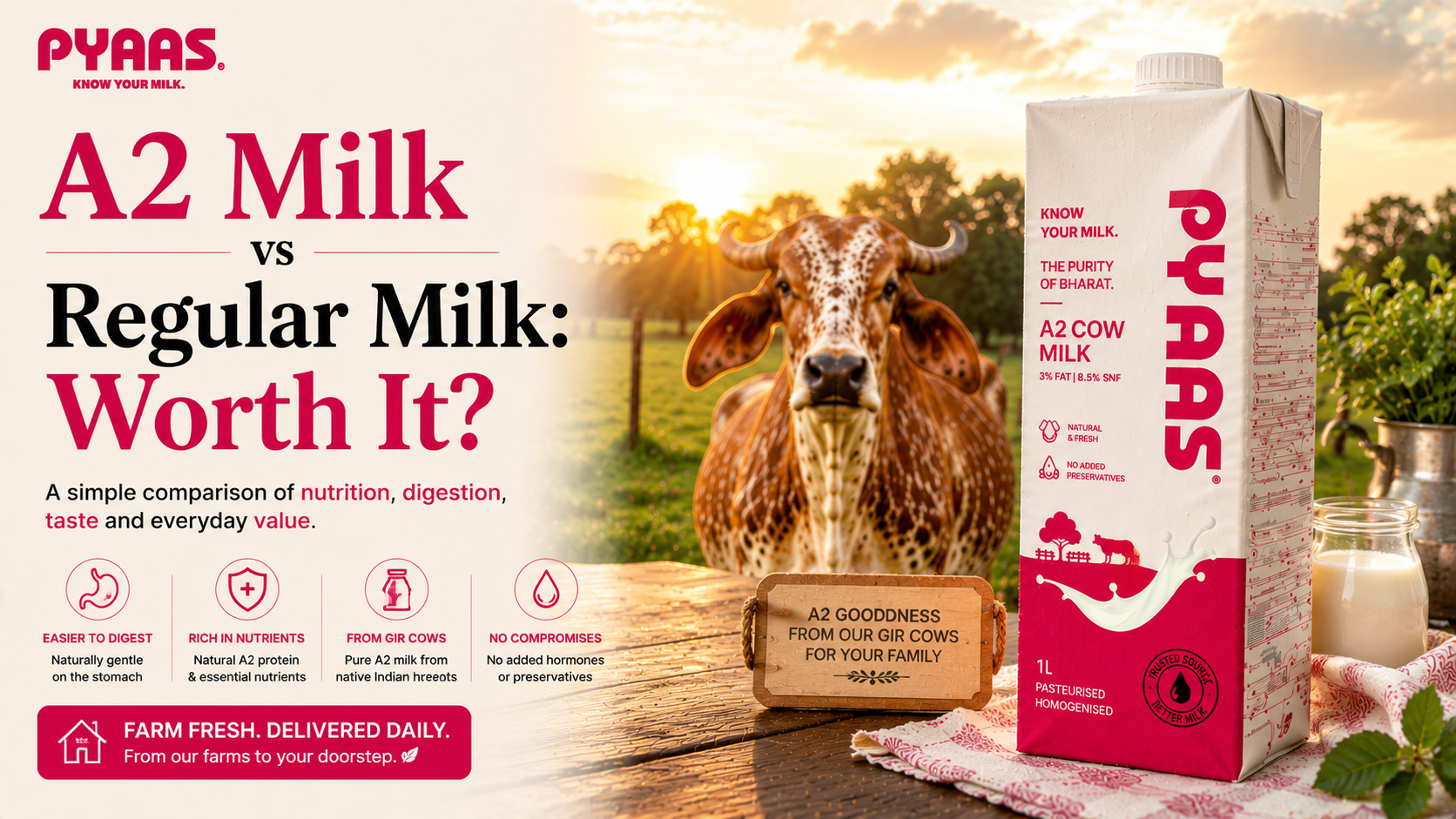
A2 Milk vs Regular Milk: Is It Worth the Price?
22 July 2026